
Last updated September 20, 2026
Full 25-point door and opener safety check with every visit - springs, cables, rollers, tracks, and your LiftMaster or Chamberlain opener included
You get a price before we start. It does not change when the truck arrives.
 Before
 After
After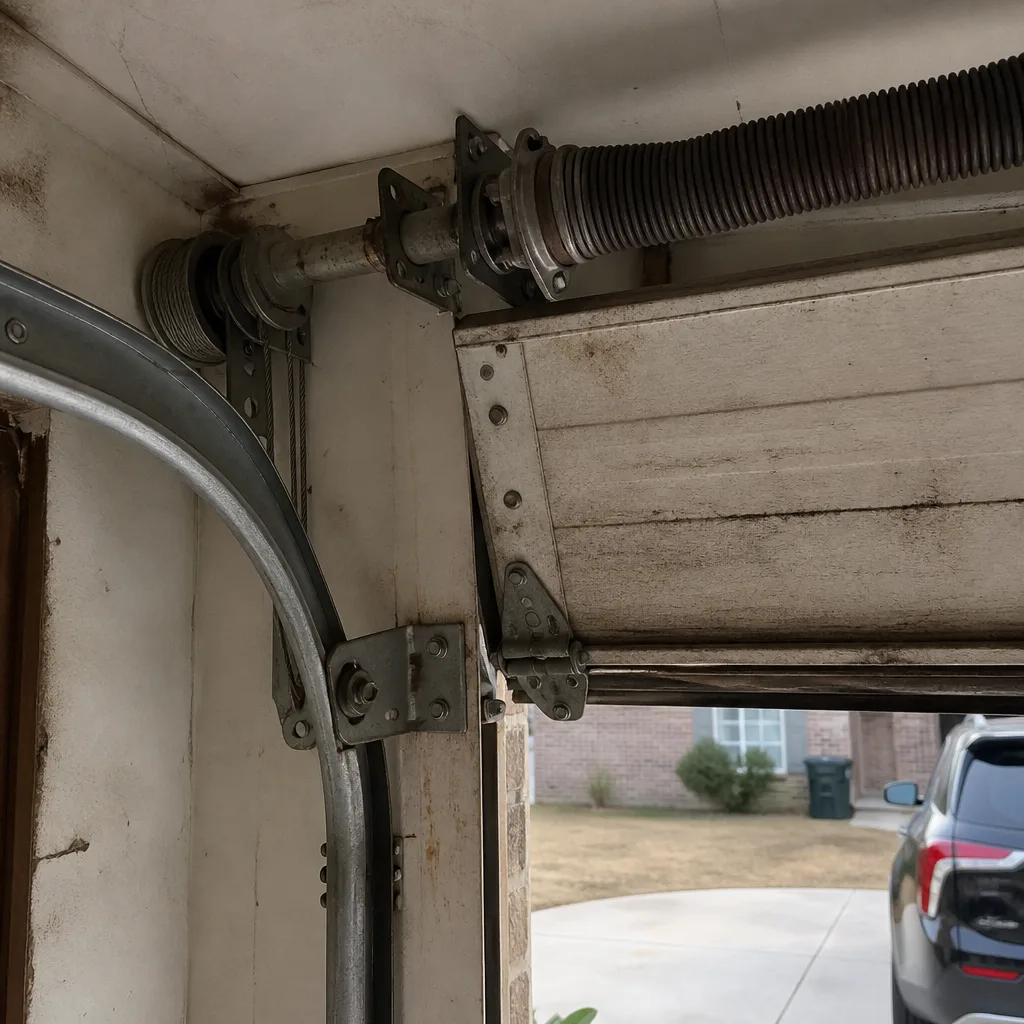 Before
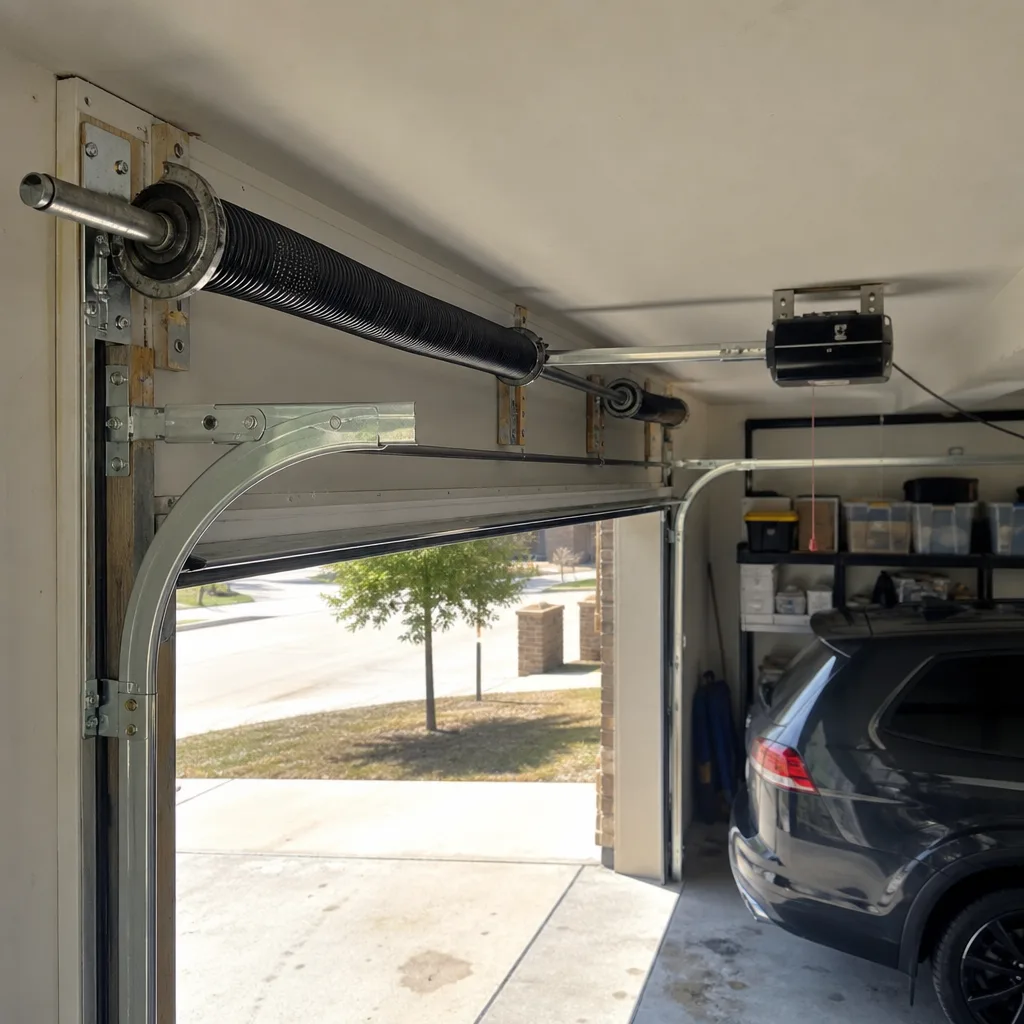 After
After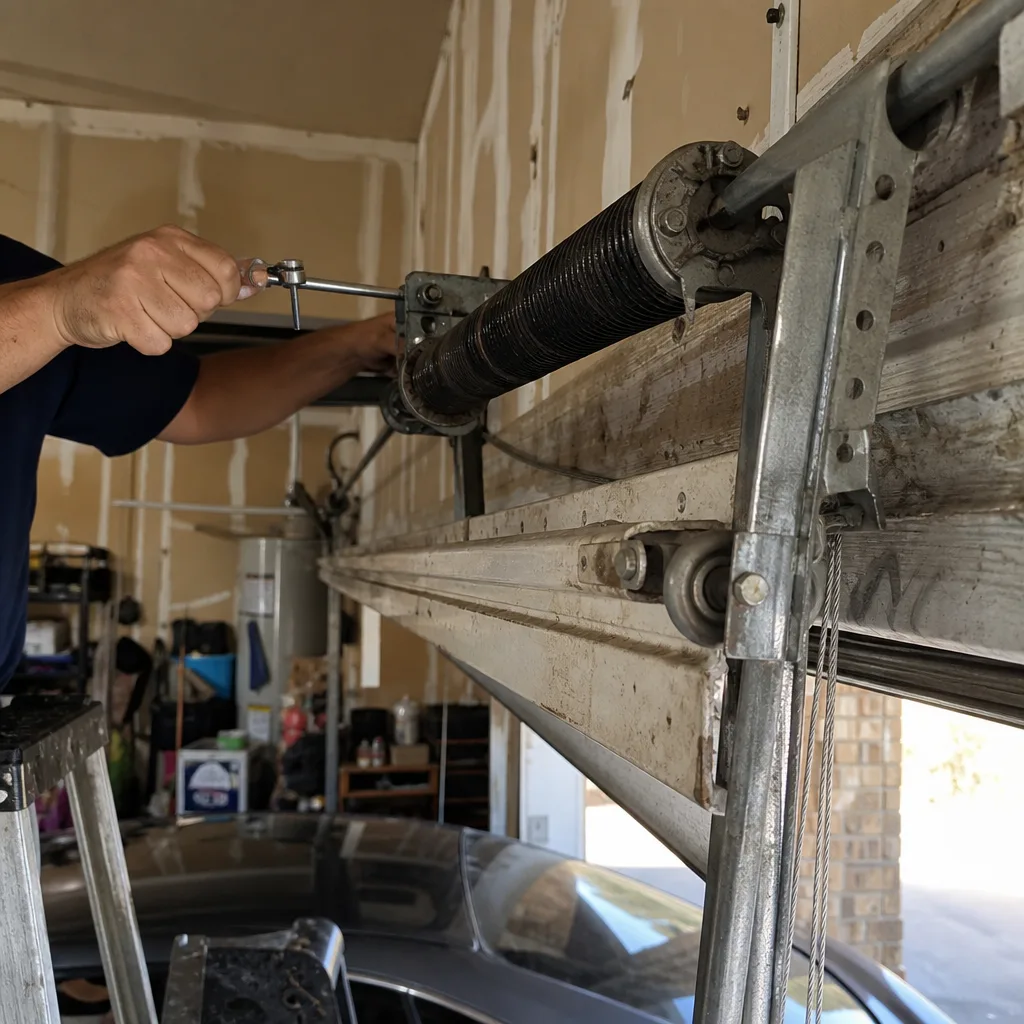 Before
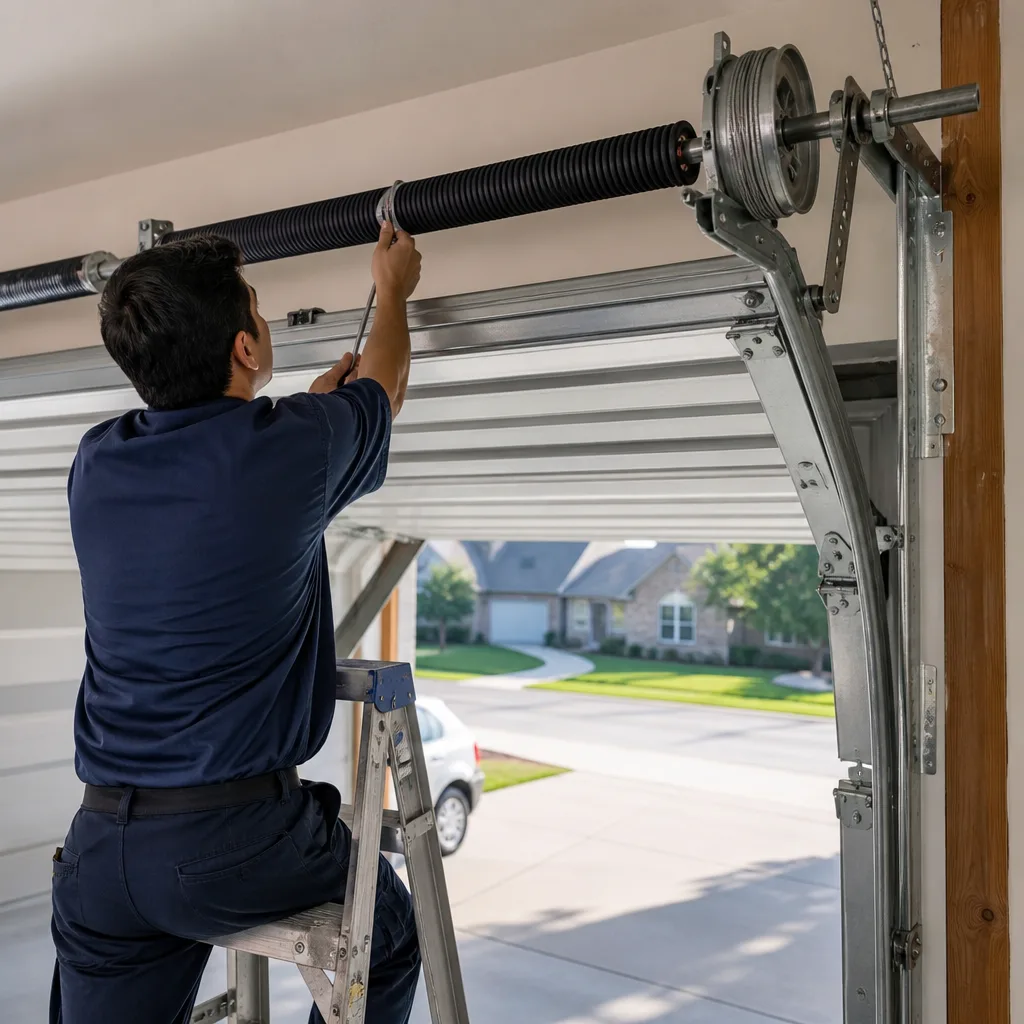 After
AfterGarage Door Repair Maintenance Checklist for McKinney Homeowners
White lithium grease applied to a garage door track is one of the most common DIY maintenance mistakes we see in McKinney. It attracts the fine clay dust that blows through Collin County, builds a grinding paste, and accelerates roller wear, which is the opposite of what the track needs. A real maintenance checklist tells you which component gets which treatment, what a failing part looks like before it snaps, and how to record what you found so you’re not starting from zero when a technician arrives. This guide gives you that sequence, with pass/fail criteria you can actually apply in a McKinney garage.
Quick Answer
A garage door maintenance checklist that works in McKinney has five steps: inspect the rollers and hinges for wear, test the door’s balance by hand, check the force settings on the opener, apply silicone spray to hinges and rollers only, and document what you found with photos and notes. Tracks get cleaned, not greased. Torsion springs get inspected, never lubricated by a homeowner. Most homeowners can complete this in 30 minutes twice a year.
Table of Contents
- Why Most Garage Door Checklists Fail in McKinney
- The Tools and Supplies You Actually Need
- Step 1: Visual Inspection of Rollers, Hinges, and Cables
- Step 2: The Balance Test and What the Numbers Mean
- Step 3: The Force-Resistance Test Without Specialized Tools
- Step 4: Lubrication: What Gets What, and What Gets Nothing
- Step 5: Documenting Your Inspection
- North Texas Maintenance Triggers: Hail, Heat, and Power Surges
- Common Mistakes to Avoid
- When to Call a Professional
- Frequently Asked Questions
- The Bottom Line
BeforeAfterWhy Most Garage Door Checklists Fail in McKinney
A checklist that says “lubricate moving parts” without naming the lubricant, the parts, and the parts to skip is not a maintenance guide. It’s a liability paragraph. We apply the same standard the technicians at Servo Garage Doors McKinney home use on every job: name the component, state the condition you’re looking for, and define what passes. Anything less and you’re guessing, which is how a $40 hinge replacement becomes a $400 panel repair after a door comes off its track.
McKinney’s climate adds a layer most generic guides ignore. The temperature swings between February and August move steel and aluminum at different rates. A torsion spring that measured a clean coil gap in March can show rust bloom and micro-cracking by July because humidity from Lake Lavon combines with heat to accelerate oxidation. The clay-heavy soil across McKinney means dust gets into every pivot point on a garage door. Your checklist has to account for that, which is why the pass/fail criteria below are written for this city, not for a generic suburban garage in Ohio.
We’ve also seen what happens when homeowners follow the lubrication advice in a manufacturer’s manual from 1998. The industry has moved on. Nylon rollers with sealed bearings do not need lubricant applied to the bearing. The hinges on a modern Clopay or Amarr door use a steel-on-steel pivot that takes a specific product applied in a specific amount. The track itself has not needed lubrication on any residential door built after 1985. A checklist that treats every door like a 1970s wood panel door will actively harm newer equipment.
The Tools and Supplies You Actually Need
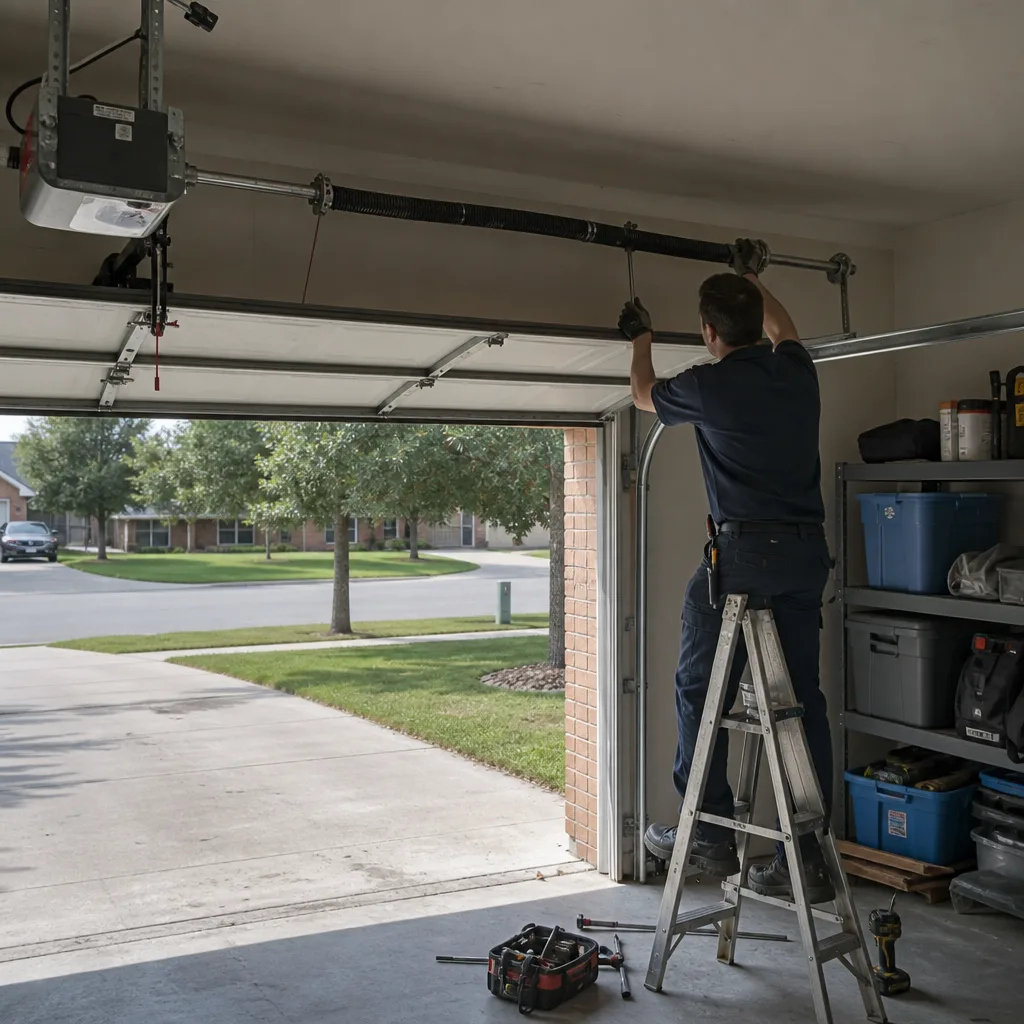
You do not need a tool bag full of specialty gear. The entire inspection and maintenance sequence can be done with four items, and two of them you already own.
- A flashlight or headlamp. Garage ceilings in McKinney homes, especially in developments built after 2015, often have a single bulb fixture that leaves the torsion spring assembly in shadow. You need direct light to see rust scale on a spring coil.
- A step stool, not a ladder. You’re inspecting at eye level, not working overhead. A ladder puts you in a position where you’ll be tempted to touch things under tension. Don’t.
- A bottle of silicone-based garage door lubricant. Not WD-40, not white lithium grease, not motor oil. A dedicated silicone spray designed for garage doors, available at any hardware store in McKinney for $8 to $15. This is the only lubricant that goes on hinges and rollers.
- Your phone camera. This is the most important tool on the list. You’re building a documentation baseline. Photos with dates attached to file names, or a simple note in your phone, become the reference point a technician uses when quoting future work.
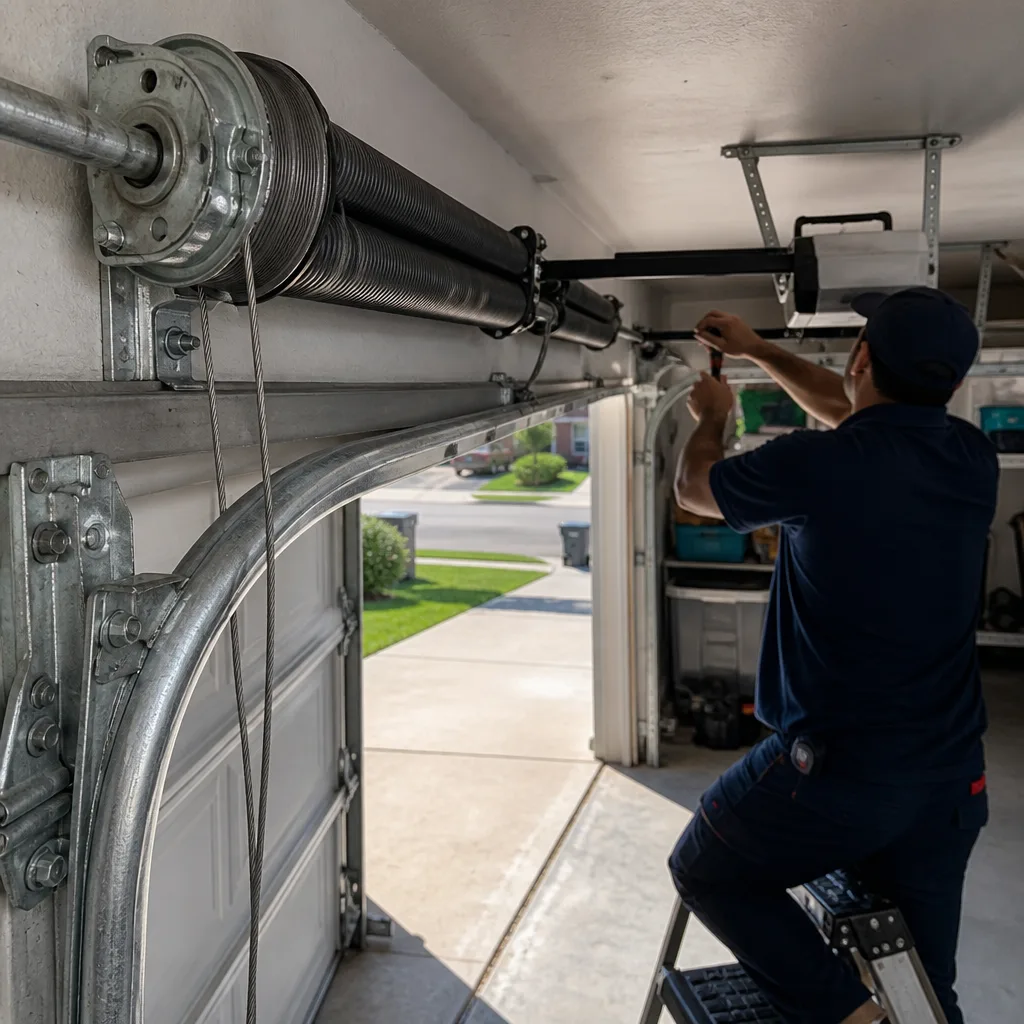
That’s the entire supply list. If a checklist tells you to buy a torsion spring winding bar or a cable puller, close that tab. Those are tools for professionals working on springs under tension, and the danger is not exaggerated. A torsion spring holds enough stored energy to break bone. Inspection does not require touching the spring, and maintenance of the spring is not a homeowner task.
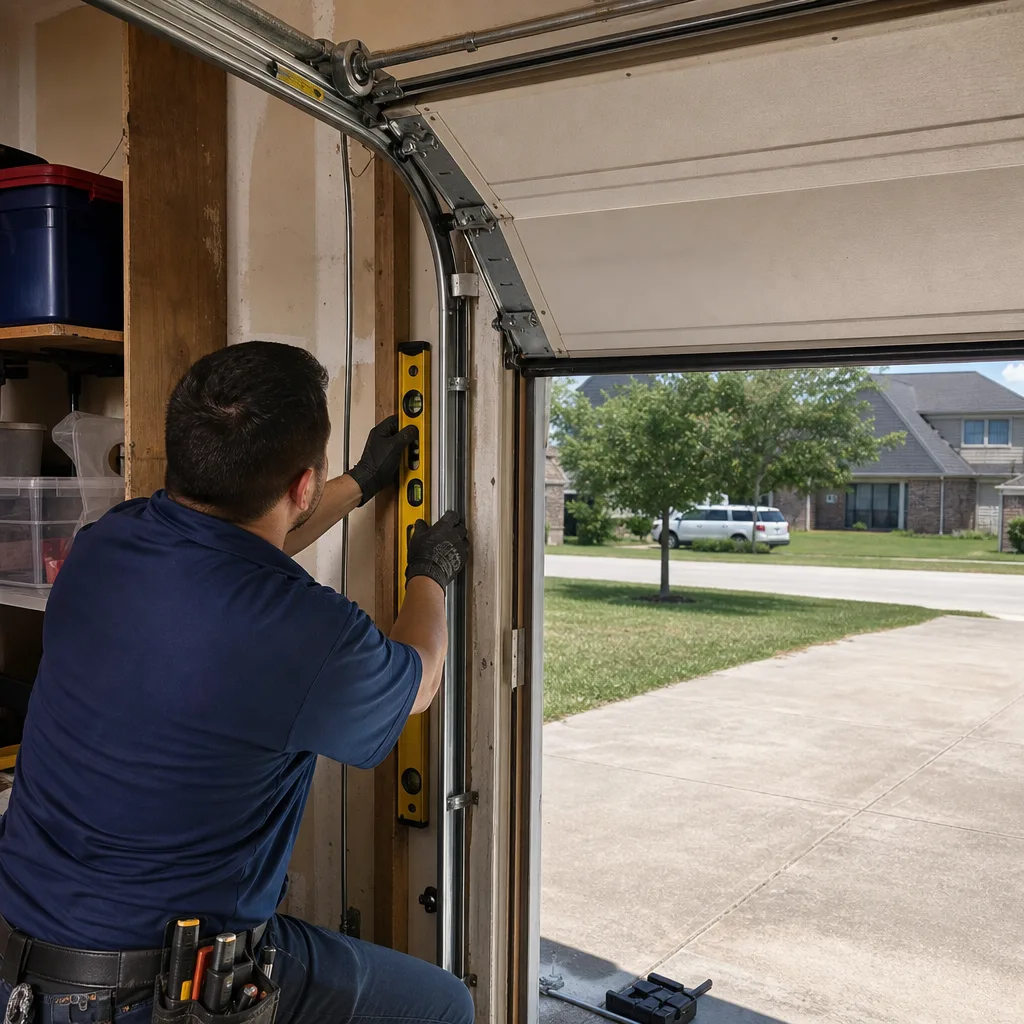
Step 1: Visual Inspection of Rollers, Hinges, and Cables
Start with the door closed and the opener disengaged. Pull the red release handle and operate the door manually for this entire sequence. You want the door’s own weight and balance doing the work, not the motor.
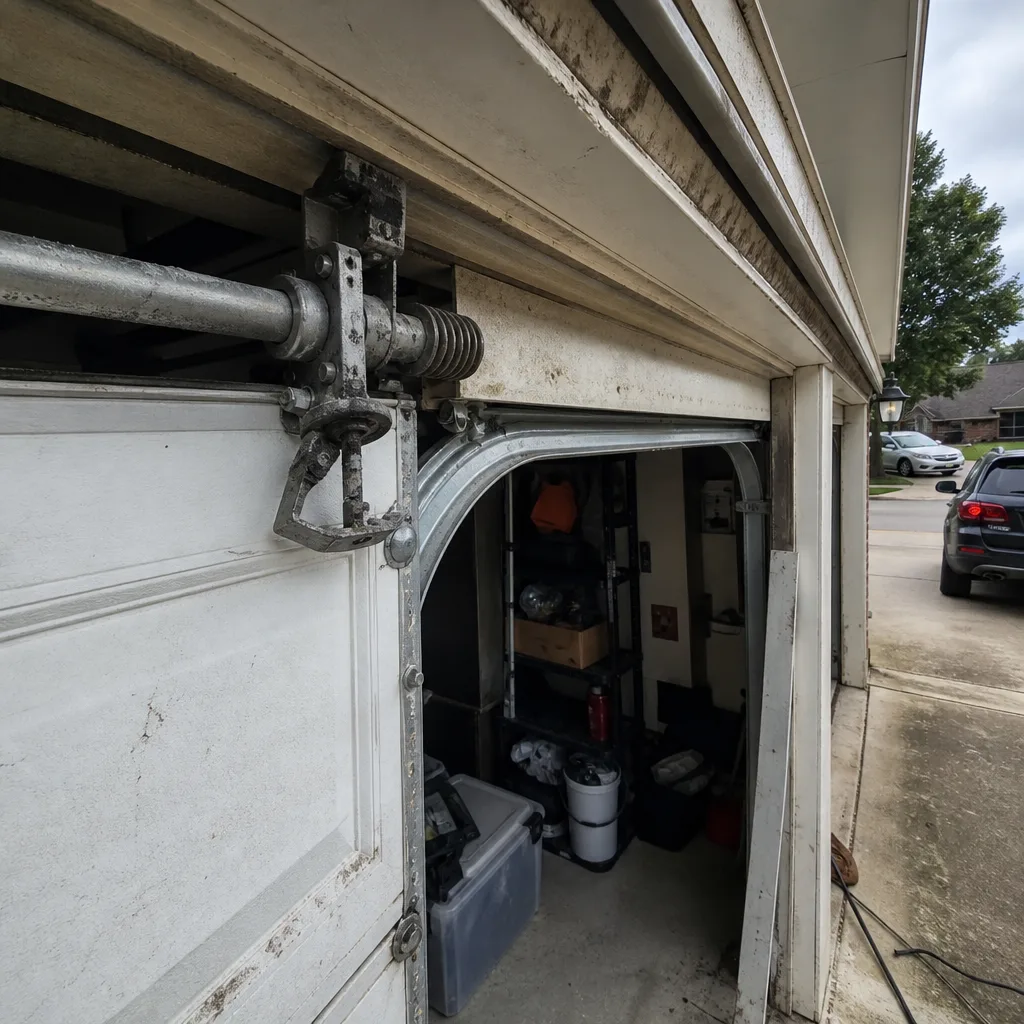
- Rollers. Look at each roller where it meets the hinge. Nylon rollers with exposed ball bearings should show no wobble when you push the door panel side to side. A cracked nylon wheel is a fail. Steel rollers should spin freely but not slide along the stem. Any roller with a flat spot, visible chip, or audible grinding sound is a fail. In McKinney’s dust conditions, we see sealed-bearing nylon rollers last 10 to 15 years, while unsealed steel rollers typically need replacement at 7 to 10.
- Hinges. Look at the hinge plates where they bolt to the door sections. Check for hairline cracks radiating from the screw holes. Check for a gap between the hinge leaf and the door face, which indicates the screw has stripped the wood or the metal has deformed. A hinge with a crack is an immediate replacement item, not a monitor item.
- Cables. The lift cables run along both sides of the door from the bottom bracket to the drum above. Look for broken strands, which will appear as small fuzzy spikes along the cable. Look for rust at the cable loop where it attaches to the bottom bracket. Any broken strand means the cable is compromised and should be replaced before the next major temperature swing puts full load on it. Do not touch the cable. Inspect with your eyes.
- Bottom weather seal. Run your hand along the rubber seal at the bottom of the door, looking for gaps, cracks, or sections that have pulled out of the retainer. This seal keeps McKinney’s summer dust and winter rain out of the garage. A seal that lets daylight through is a fail and costs under $40 to replace.
Record each item as pass or fail in a note, with a photo of anything that fails. The photo matters. A service visit for garage door repair in McKinney goes faster and the quote is more accurate when you can show what you saw.
Step 2: The Balance Test and What the Numbers Mean
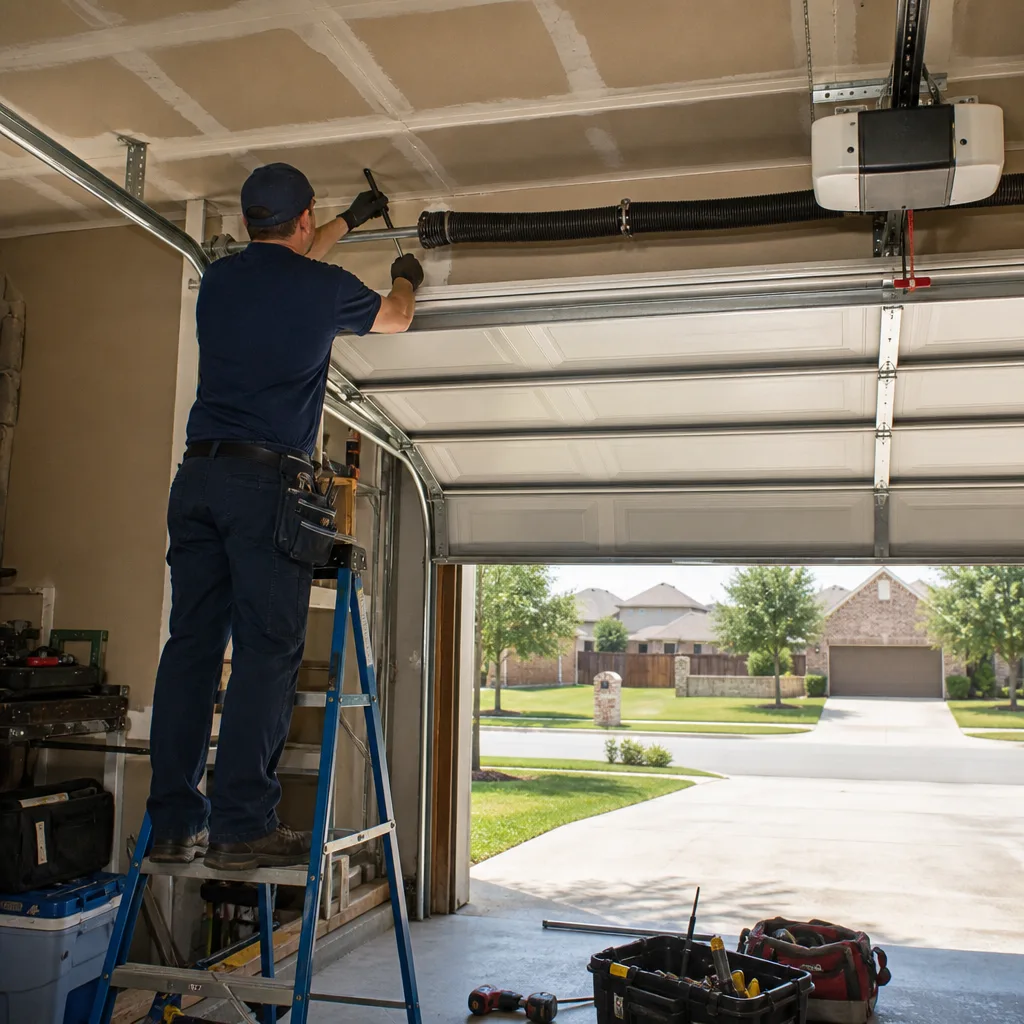
The balance test answers one question: is the torsion spring doing its job? A properly balanced door will hold position at the halfway point when you release it. A door that drops or climbs is telling you the spring has lost tension or the door’s weight has changed.
- With the opener still disengaged, lift the door to the halfway point, about four to five feet off the ground depending on your door height.
- Release the door slowly. Do not push it. Do not hold it.
- Watch what happens. A passing door holds within two inches of where you released it. A door that drops more than a few inches means the spring is under-tensioned or failing. A door that climbs means the spring is over-tensioned.
- Repeat at a quarter-open and three-quarter-open position. The door should hold at both points as well.
The numbers matter here. A door that drops three inches at mid-height and holds is likely under-tensioned by a small amount, which you can address when it’s convenient. A door that drops a foot or more within two seconds has a spring that is actively failing, which means replacement is measured in weeks, not months. In McKinney, where a late-spring heat spike can add additional stress to an already-compromised spring, we tell homeowners not to gamble with a door that fails the balance test badly and to consider our Garage Door Repair services instead.
If the door is hard to lift at all, or feels heavier than it did last season, do not force it. That’s a spring that has broken or lost significant tension. Lower the door carefully and call a professional. The door will weigh 130 to 400 pounds depending on the model and material, and a manually-lifted door with a broken spring puts the full load on you.
Step 3: The Force-Resistance Test Without Specialized Tools
The force test checks whether the opener’s safety reverse feature is functioning. Modern openers from LiftMaster and Chamberlain have a built-in force-sensing circuit that reverses the door when it hits an obstruction. You can test it with a roll of paper towels.
- Re-engage the opener by pulling the release handle toward the door until it clicks, then run the opener through one full cycle so it reconnects.
- Place a full roll of paper towels flat on the floor under the path of the closing door.
- Press the close button or wall console.
- Watch the door’s leading edge. It should contact the roll, pause, and reverse direction within two seconds of resistance being detected.
- If the door crushes the roll or continues pressing down without reversing, the force limit is set too high or the safety sensor is misaligned. This is a fail and a genuine safety issue.
Also check the photo eye sensors at the base of the door track on both sides. They should have a solid indicator light on each unit. A blinking light means misalignment, dirt, or a wiring fault. Clean the lens with a dry cloth first, then adjust the angle. Most modern Genie and Chamberlain openers use a simple LED feedback system: solid green and solid red means aligned, any blinking means a fault.
This test takes ninety seconds and catches the second most dangerous failure mode on a garage door system, right behind broken springs. A door that doesn’t reverse under resistance is a door that can injure a child or pet. Run this test every time you do the maintenance checklist.
Step 4: Lubrication: What Gets What, and What Gets Nothing
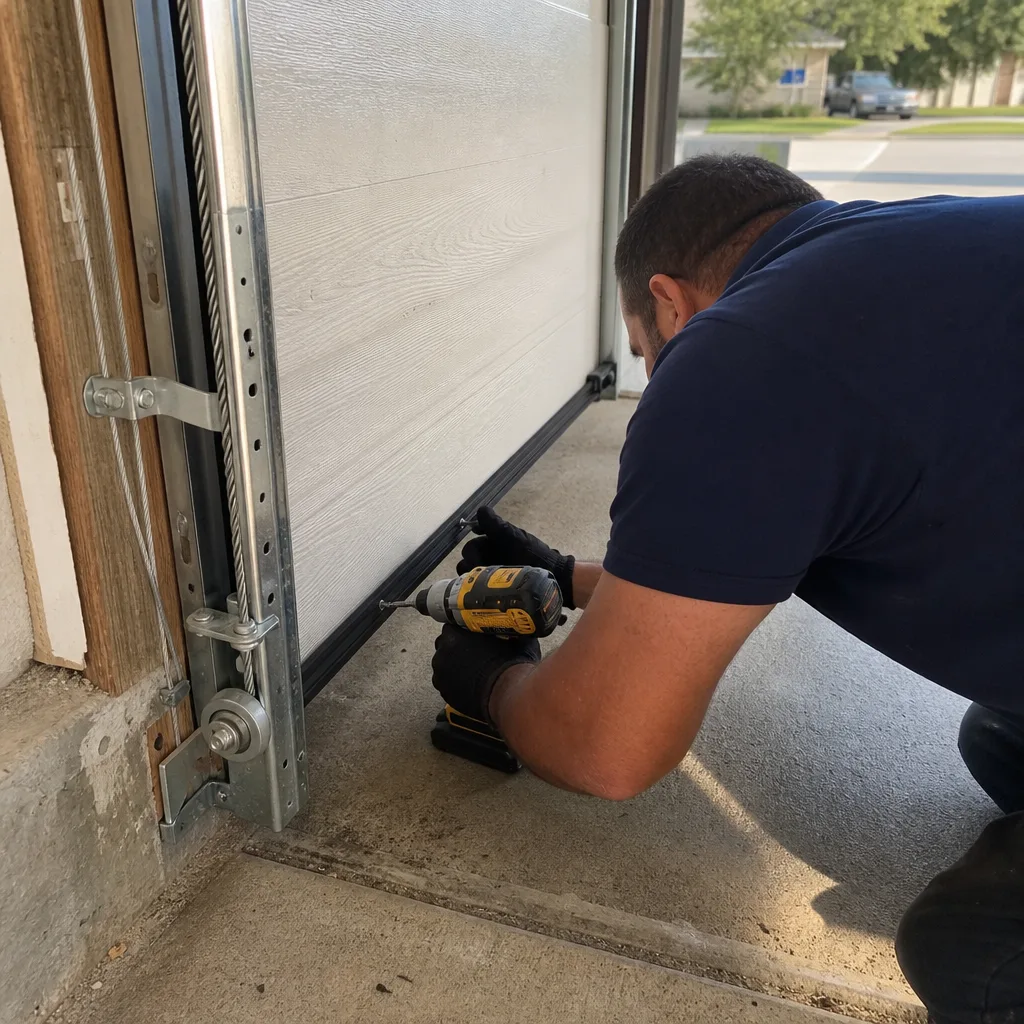
Lubrication is where well-intentioned McKinney homeowners do the most damage. Here is the complete list of what gets lubricated and what does not, for a modern sectional garage door.
- Hinges: silicone spray, yes. Apply one short burst of silicone-based garage door lubricant to each hinge pivot point, then wipe away any excess with a rag. The goal is a thin film on the pivot, not a dripping coating. Silicone dries as a lubricating film that does not attract dust.
- Rollers with metal stems: silicone spray on the stem only, not the wheel. The stem where it passes through the hinge is the pivot point. If the roller has exposed bearings, you do not lubricate the bearings. They are sealed at the factory and adding lubricant will only attract dust that works its way past the seal.
- Rollers with nylon wheels: nothing on the wheel, silicone spray on the stem only, same as above. The nylon wheel runs against the track and needs no lubricant. Nylon is self-lubricating by design.
- Tracks: nothing. The track is not a bearing surface that needs lubrication. It needs to be clean and dry so the roller makes full contact. Lubricating the track is the single most common mistake, and it converts the track into a dust-and-grit collector. If the track looks dirty, wipe it with a dry rag. If there’s built-up residue, clean it with a degreaser and dry it thoroughly before running the door.
- Torsion springs: nothing applied by a homeowner. The springs need a light coating of a professional-grade spring lubricant applied by a technician who knows how to work around a component under tension. The average homeowner should not be spraying a spring. Inspect it visually. Leave the lubrication to a service visit.
- Lock cylinder: graphite powder, not a liquid lubricant. If your door has a manual locking handle, a dry graphite powder applied once a year keeps the cylinder operating in McKinney’s temperature swings. Liquid lubricants gum up in cold weather and attract dust in dry weather, which is most of the year.
One more note on product selection: the aerosol can of “garage door lubricant” at the local hardware store is often just white lithium grease with a different label. Read the ingredients. You want a silicone-based spray that lists polydimethylsiloxane or a similar silicone compound, not petroleum distillates. The difference is whether it dries clear and clean, or stays wet and sticky in a McKinney garage at 105 degrees in August.
Step 5: Documenting Your Inspection
Documentation is the part everyone skips, and it’s the part that saves you money later. When a technician comes to quote a repair and you can show a dated photo of the roller that was already showing wear in March, the conversation changes. You’re not guessing when the problem started. You have a baseline.
- Take photos of any component that failed the inspection. Close-ups matter. A photo of rust on a torsion spring coil from six inches away tells us more than a full-door shot from ten feet.
- Note the date and the finding. A simple note in your phone works: “October 12 - left #2 hinge cracked at screw hole, bottom weather seal gap at left corner.”
- Store the photos in an album on your phone named “Garage Door.” No special app required. The goal is that you can find them six months later.
- Note anything that passed but looked questionable. A roller with slight wobble, a cable with minor surface rust, a spring with a small amount of rust bloom. These become the early-warning system for next season’s inspection.
This documentation practice is the same standard we apply on every garage door installation in McKinney. Our technicians deliver a documented photo record on every visit, showing what was found and what was done. Clause 4 of The Haven Standard is why the technician photographs the failed part before quoting a replacement. You should hold your own maintenance record to the same bar.
North Texas Maintenance Triggers: Hail, Heat, and Power Surges
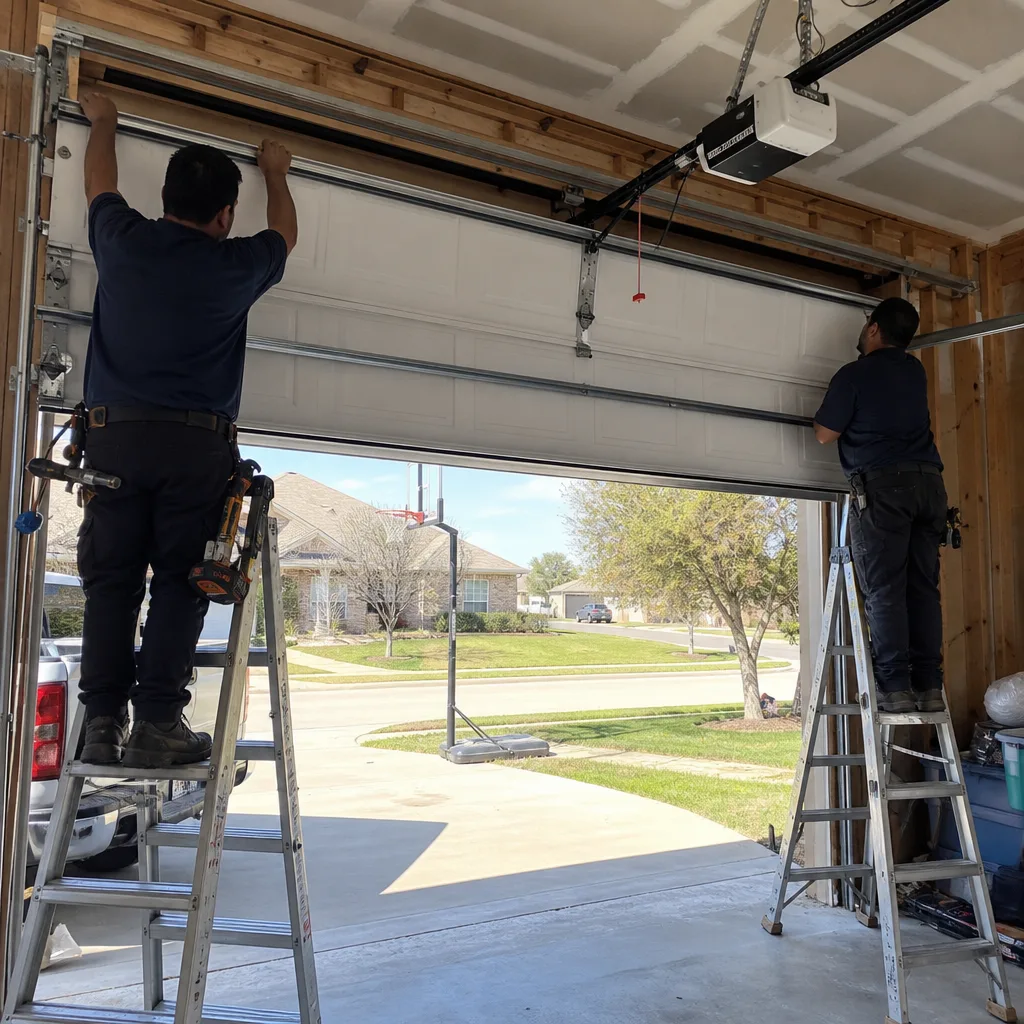
The twice-a-year schedule is a baseline for McKinney. But there are three North Texas events that should trigger an immediate re-inspection, because each one stresses a different component in a specific way.
Hail events. McKinney gets hit by hail on a springtime basis, and the garage door takes the impact on the largest exposed surface of the house. Hail dents the panel face, but it also transmits shock through the panel to the hinges, the roller stems, and the track brackets. After any hail storm with stones larger than a quarter, run the visual inspection on all hinges and brackets. A hinge with a hail-related stress fracture can fail weeks after the storm, not days.
Temperature swings past 100°F. McKinney’s summer heat expands the metal in the track, the spring, and the door sections. A door that ran fine in May can bind in August because the track has expanded and the rollers no longer have proper clearance. After the first sustained heat wave of the year, run the balance test. If the door feels tighter than it did in the spring, that’s the thermal expansion showing you a clearance problem that needs adjustment before the expansion gets worse.
Power surges that reset the opener. North Texas thunderstorms are frequent, and a power surge can reset the logic board on a Genie or LiftMaster opener without any visible damage to the unit. If your opener’s travel limits or force settings reset after a storm, the door may behave differently, closing too hard or reversing unpredictably. After any storm that causes a power flicker, run the force-resistance test and check that the opener’s travel limits still stop the door at the correct position.
These three triggers are the reason a McKinney homeowner needs a checklist that is more responsive than the generic “spring and fall” advice. this climate is harder on garage door components than the national average, and the maintenance schedule should reflect that.
Common Mistakes to Avoid
- Lubricating the track. This is the mistake that inspired this guide. Lubricant on the track attracts the dust that blows through McKinney and creates a grinding compound that wears the rollers faster. The track should be dry.
- Using WD-40 on hinges and rollers. WD-40 is a penetrating oil and solvent, not a lubricant. It cleans, it loosens, and then it evaporates and leaves the metal drier than before. It is the wrong product for a garage door hinge.
- Spraying the torsion spring yourself. A homeowner should not be working near a torsion spring at all. Inspection only. Lubrication of a spring under tension is a technician task.
- Ignoring a door that is slightly out of balance. A door that drops two inches and holds is not fine. It’s telling you the spring is wearing, and putting off the adjustment until the spring fails completely turns a $200 service call into a $400 emergency call on a Saturday night.
- Skipping the force test because the door “seems fine.” A door that reverses too late or not at all feels like it’s working normally right up until it isn’t. The force test catches the failure before it catches someone.
- Not documenting the inspection. A checklist you complete and forget provides no value when a technician arrives six months later. The photo and the date are the point.
- Testing the door with the opener still engaged. Operating a door manually while the opener is engaged works against the motor and the carriage. Always disengage first with the red release handle, then test.
When to Call a Professional
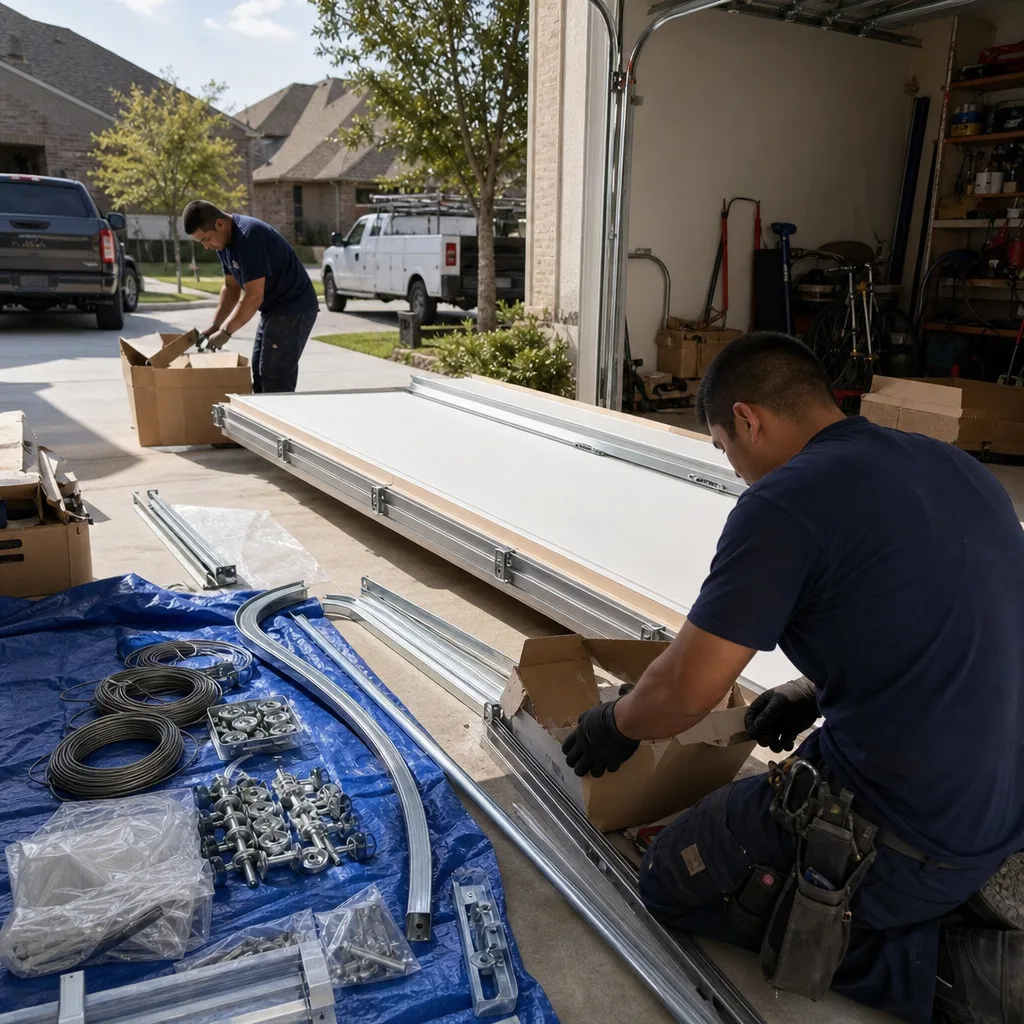
A broken torsion spring, a cable with broken strands, a door that has come off the track, or an opener that will not reverse under resistance are all professional repair items. These are not maintenance tasks. They involve components under stored tension or electrical systems that can cause injury when handled incorrectly. Servo Garage Doors McKinney offers free estimates in McKinney, and every quote is a flat, written price delivered before any work starts. No exceptions, per Clause 1 of The Haven Standard. Call (469) 815-7610 for an inspection or a quote. We answer the phone with a live person, not a recording, at any hour.
Frequently Asked Questions
A basic garage door tune-up and safety inspection in McKinney typically runs $75 to $150 when performed as a standalone service, and many companies apply that fee toward the cost of any repair that is needed. For How to Hire a Garage Door Contractor in McKinney: A Step-by-Step Guide, see our companion post. At Servo Garage Doors McKinney, every quote is a flat, written price delivered before work starts, so you will know the number before any service is scheduled. Call (469) 815-7610 for an exact quote.
Twice a year is the baseline for McKinney, once in early spring before the heat and once in late fall before the first freeze. After a hail event, a power surge, or a heat wave past 100°F, run the inspection checklist again. The McKinney climate stresses the door more than the national average, and the schedule should reflect that.
A silicone-based spray lubricant is the correct product for hinges and roller stems because it dries to a film that does not attract the dust common in North Texas. Do not use WD-40 or white lithium grease on garage door components. Tracks get nothing, lock cylinders get graphite powder, and torsion springs should be left to a professional.
For repair calls, yes, same-day service is available from most reputable McKinney garage door companies for common failures like broken springs, snapped cables, and opener issues. Emergency calls are answered by a live person at Servo Garage Doors McKinney, with a named technician dispatched and an on-the-way text sent. Call (469) 815-7610 and we will tell you who is coming and when they will arrive.
With Servo Garage Doors McKinney, no. The price is quoted in writing before any work begins, and that number does not change after the technician sees the door. Clause 1 of The Haven Standard requires a flat, written price and a written scope delivered before any work starts. What you agreed to is what you pay.
Servo technicians carry the most common replacement parts, including torsion springs across standard weight ranges, lift cables, rollers, hinges, and weather seals. That means most repairs are completed in a single visit, not a visit plus a second trip. The technician will confirm the specific part for your door, with the photo record of the failed component, before any removal begins.
The Bottom Line
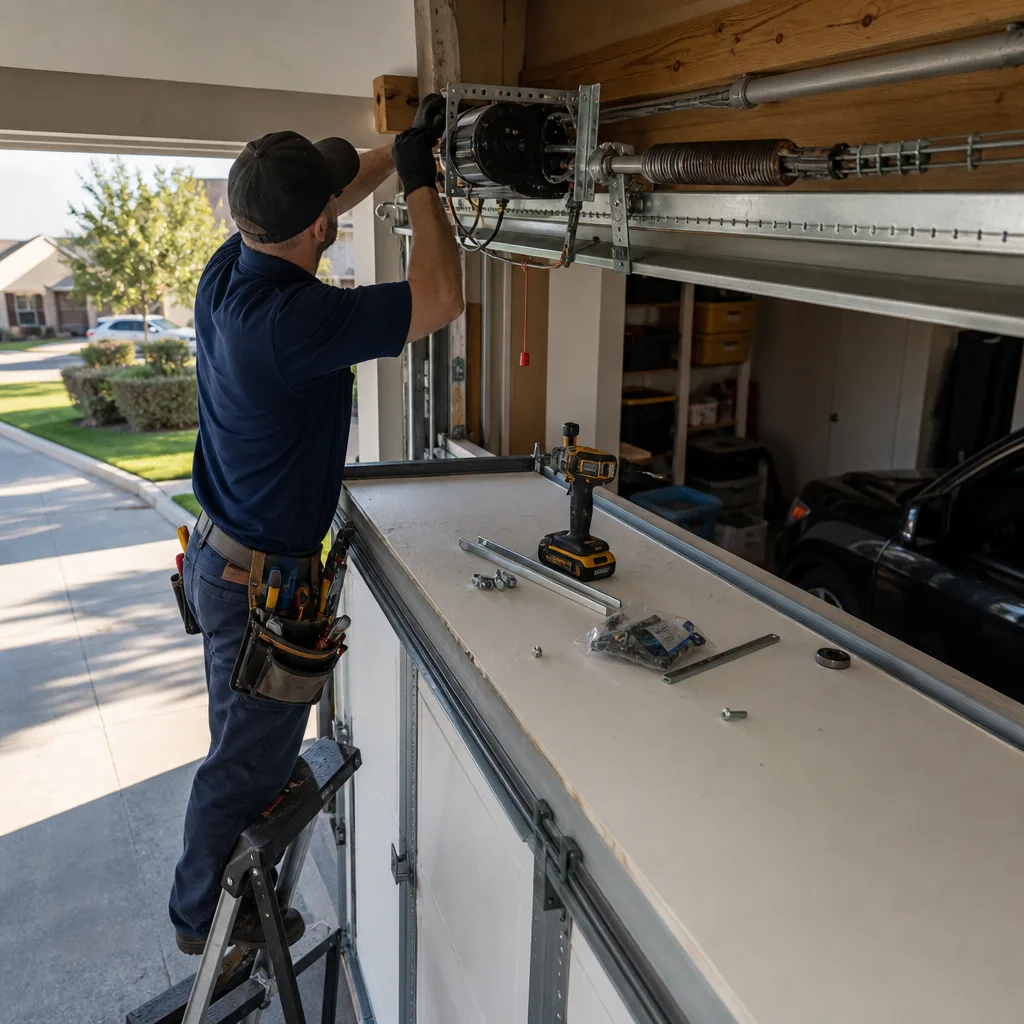
A garage door maintenance checklist is only worth the specificity of its instructions and the records you keep from following it. Inspect the rollers, hinges, cables, and weather seal with a flashlight. Test the balance and the force reverse with simple objects and no specialized tools. Lubricate only with silicone spray on the correct points, and skip the track entirely. Document everything with your phone. In McKinney, the climate adds hail, heat, and power surges to the standard maintenance equation, and your checklist should trigger a fresh inspection after any of those events. Follow this sequence twice a year, keep the photos, and call a professional at the first sign of a spring, cable, or track problem. For more guides & resources, explore our blog.
Written by Marcus Deller, Owner at Servo Garage Doors McKinney, serving McKinney since 2015.