
Last updated September 20, 2026
Full 25-point door and opener safety check with every visit - springs, cables, rollers, tracks, and your LiftMaster or Chamberlain opener included
You get a price before we start. It does not change when the truck arrives.
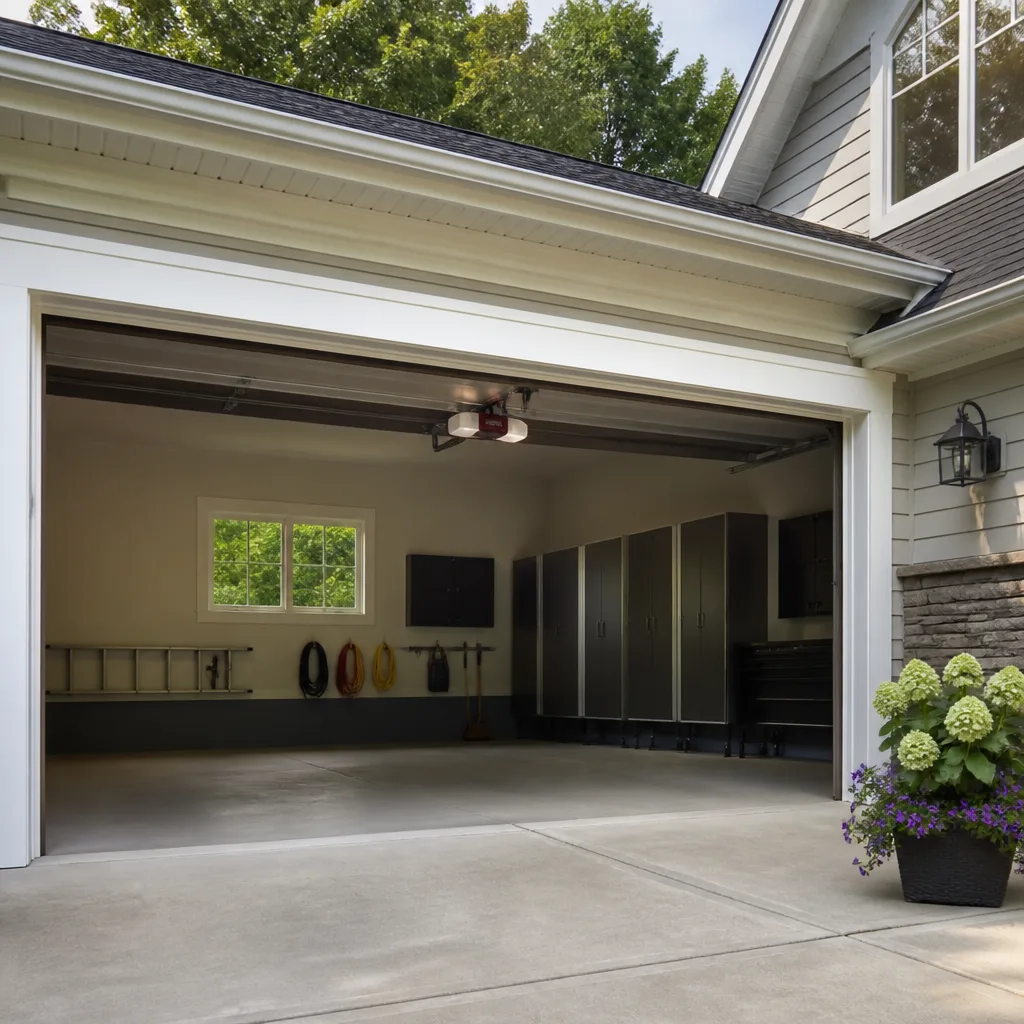
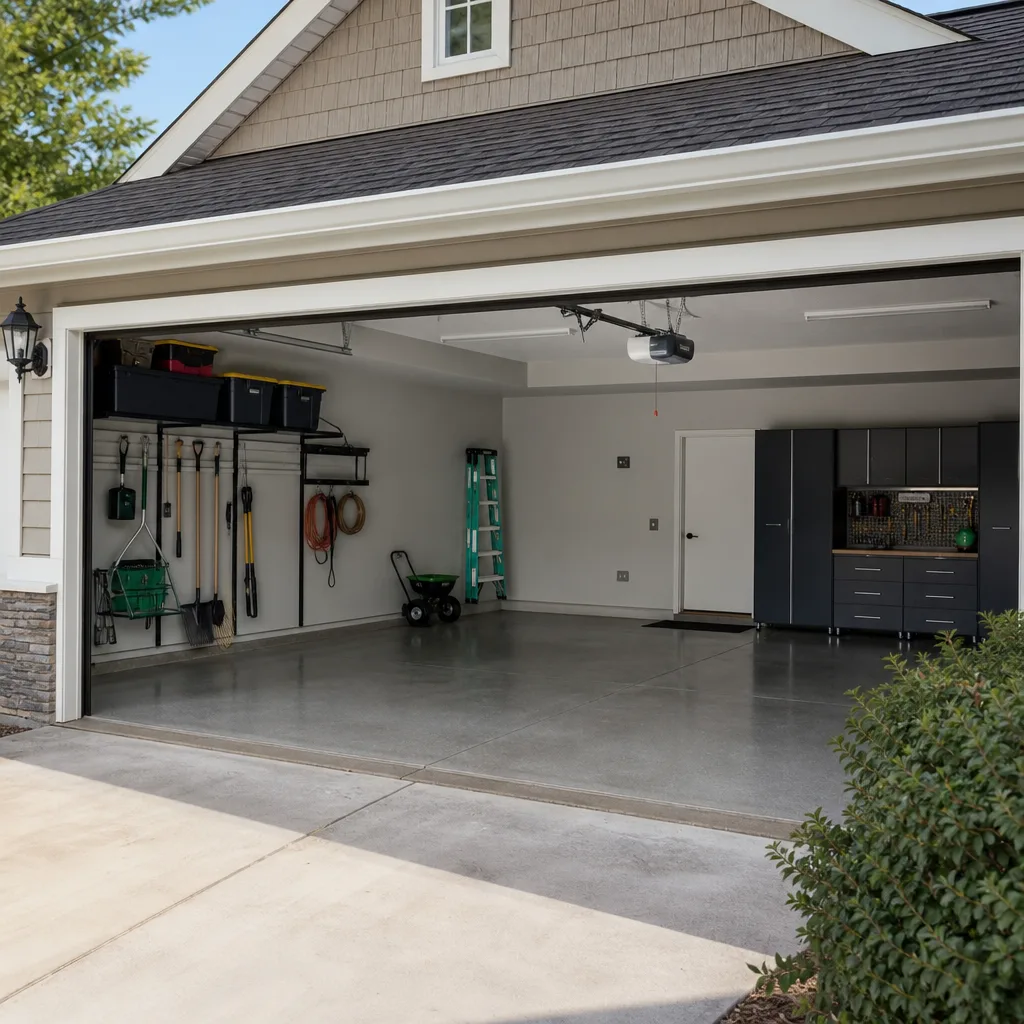
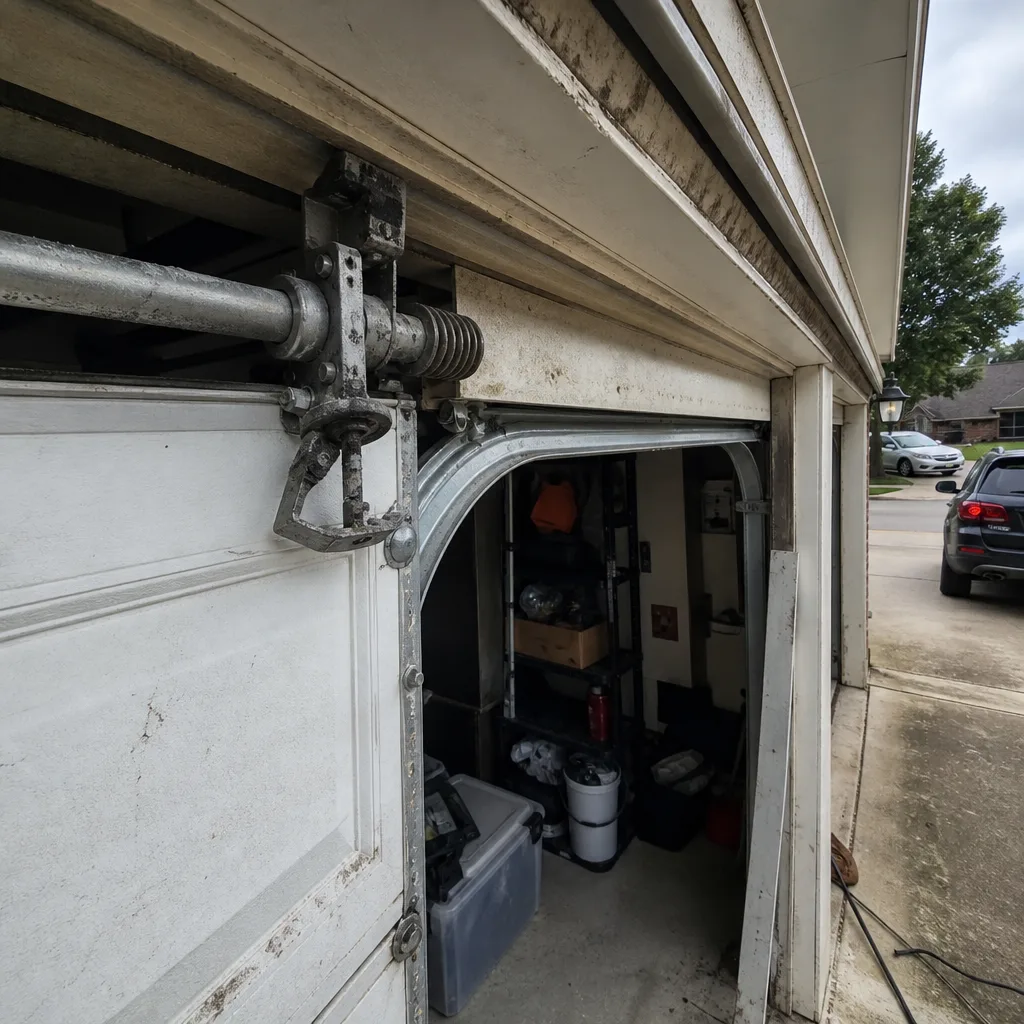 Before
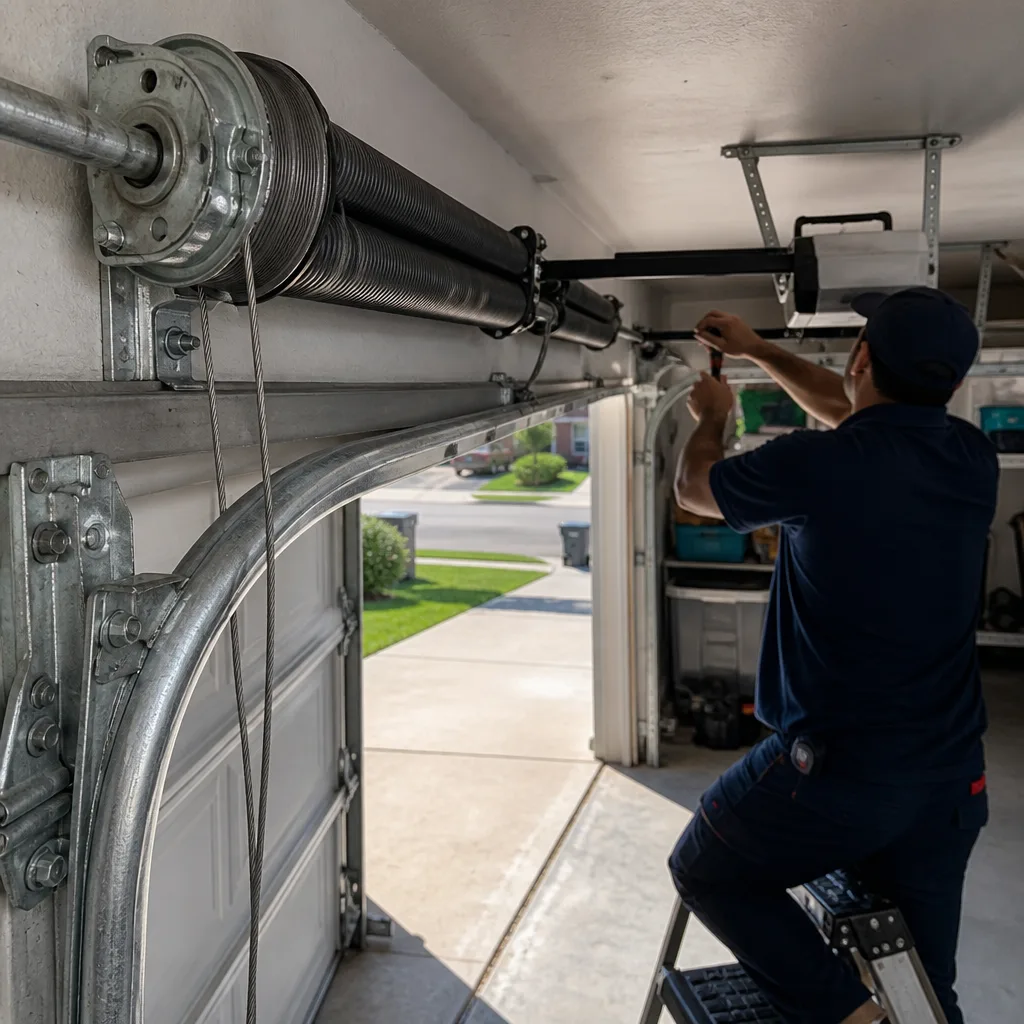 After
After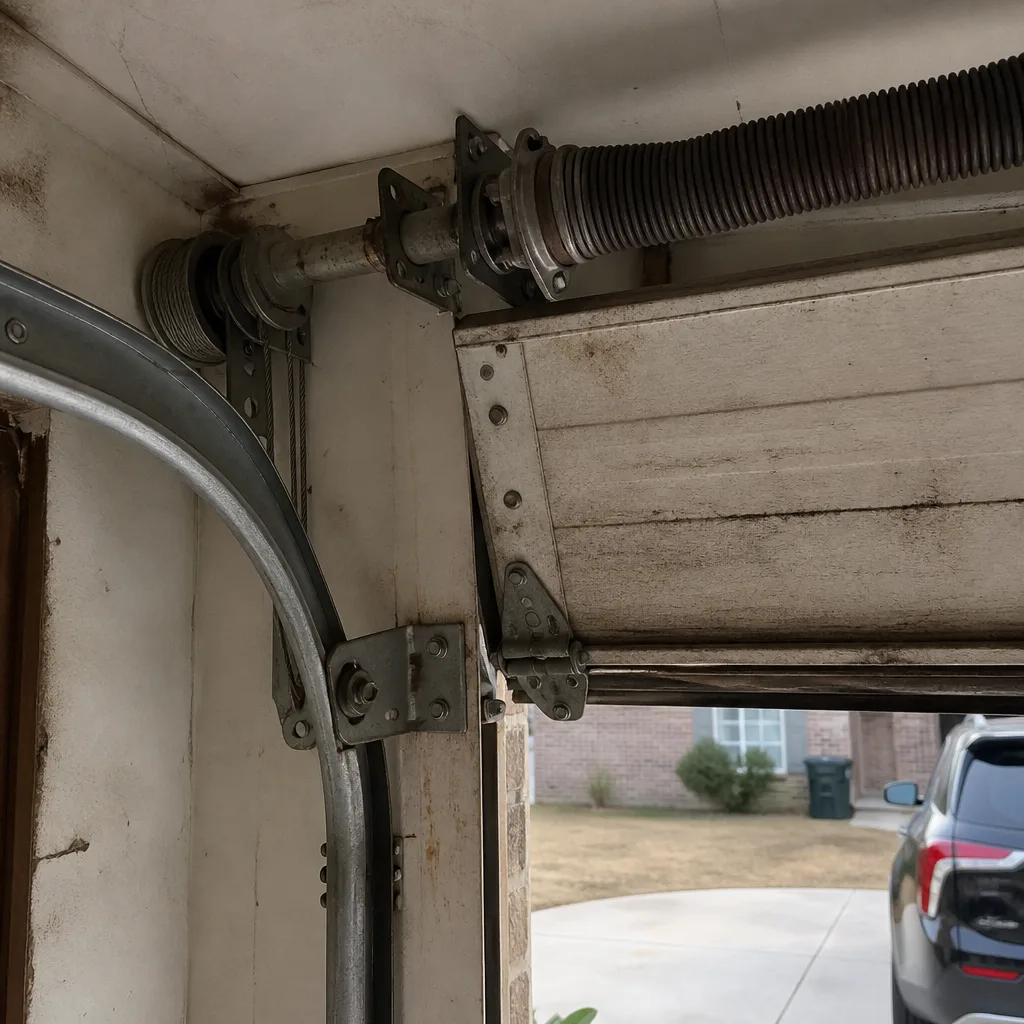 Before
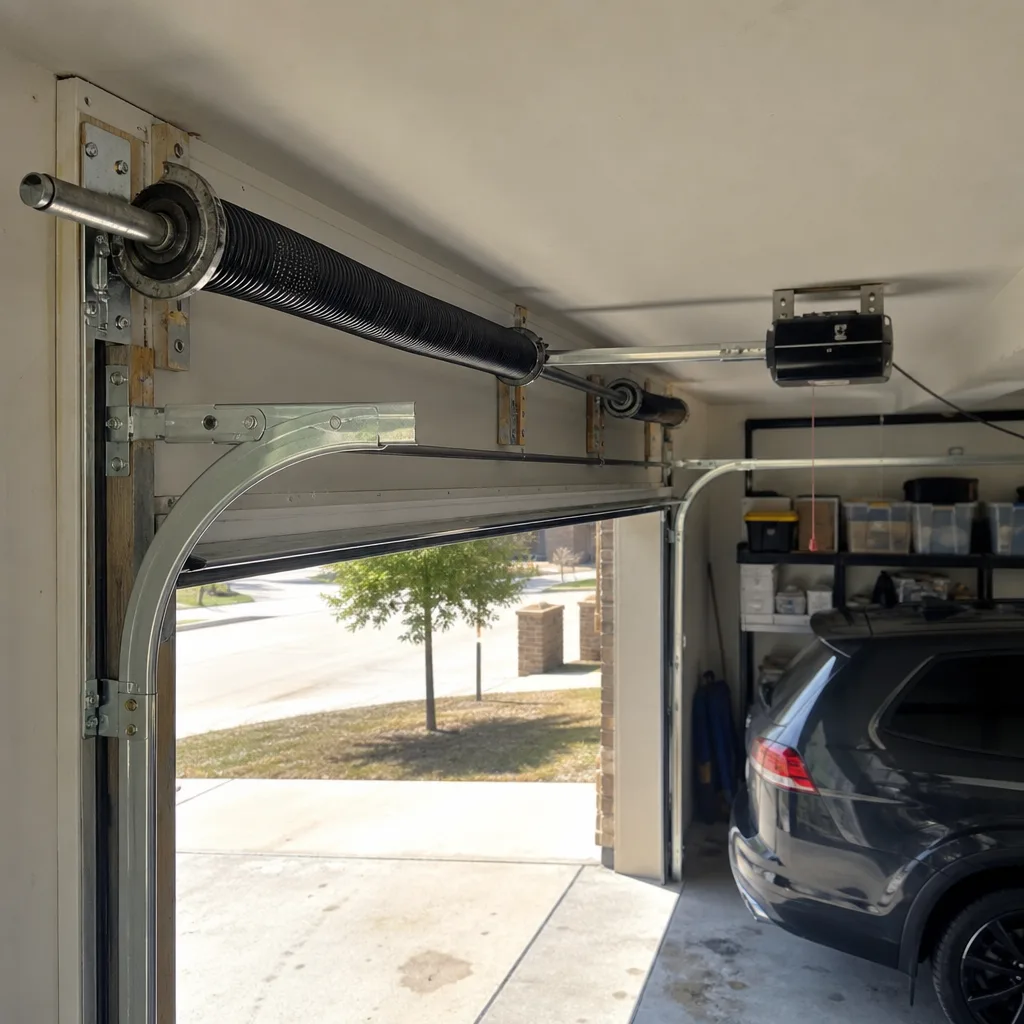 After
After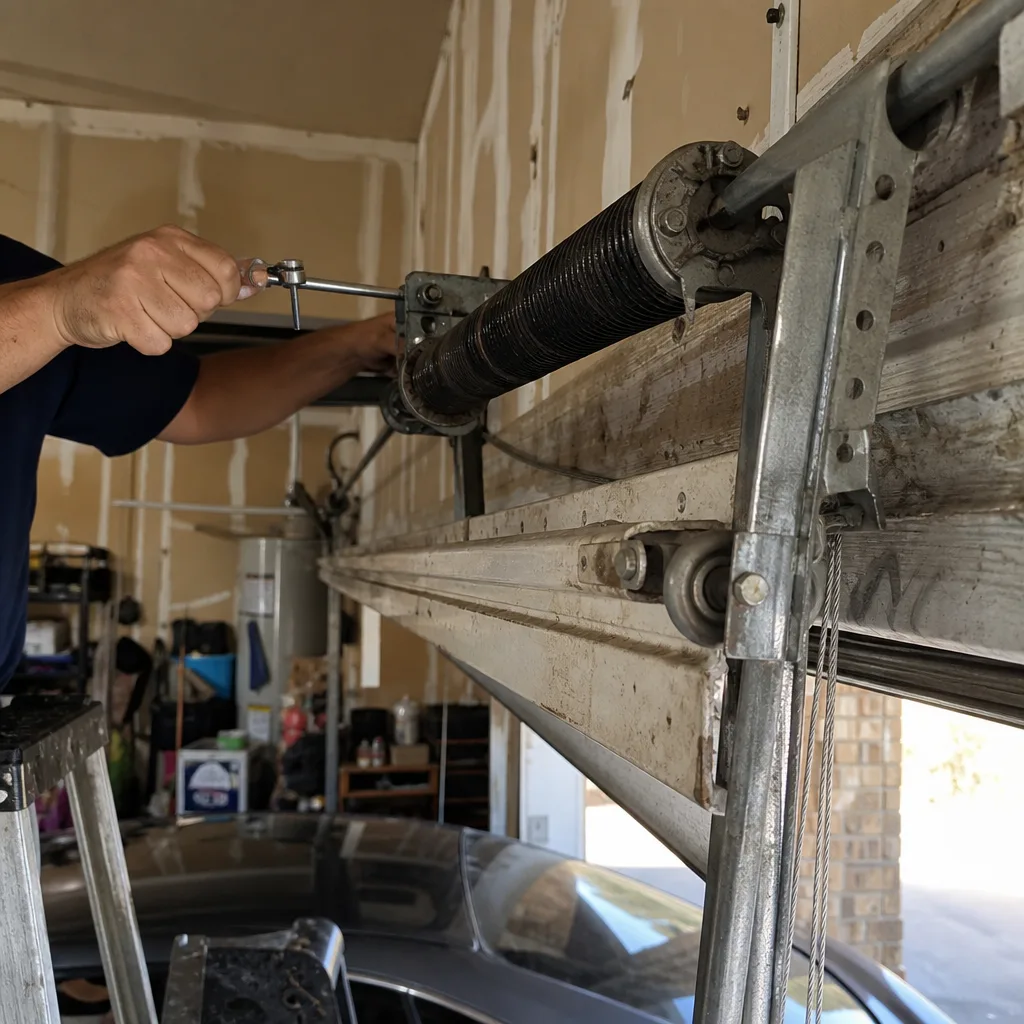 Before
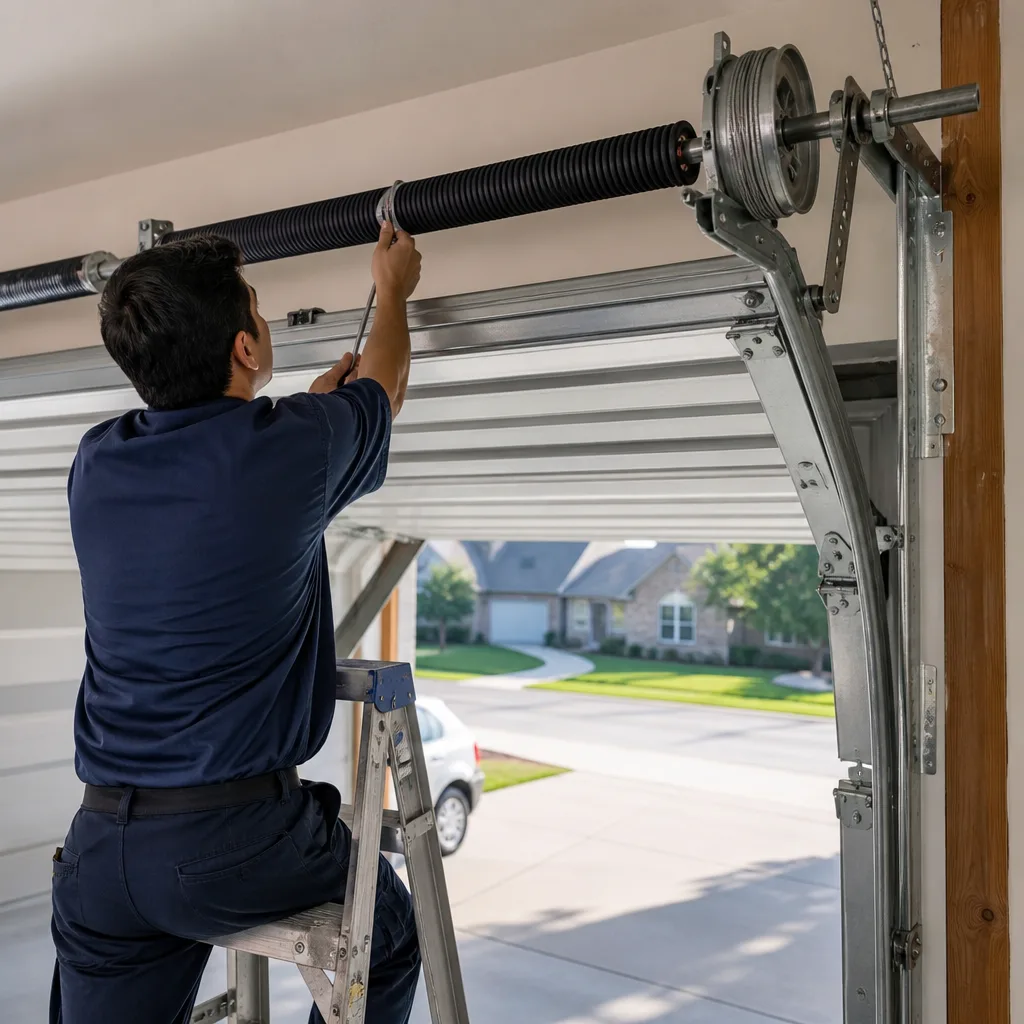 After
AfterDIY vs Professional Garage Door: The McKinney Homeowner’s Decision Guide
A torsion spring on a standard 7-foot garage door stores roughly 75 to 110 foot-pounds of torque when fully wound. That is not an exaggeration and it is not a scare tactic. It is a physics statement, and it is the reason every major door manufacturer writes warranty language that voids coverage when spring work is performed without certification documentation. If you live in McKinney and you are standing in your garage right now staring at a broken door, this guide will tell you exactly which repairs you can do safely this afternoon and which ones require a technician with a torque wrench and a license number on the invoice. For ongoing maintenance guidance, see our checklist.
Quick Answer
Most McKinney homeowners can safely handle four garage door tasks themselves: sensor cleaning and realignment, bottom weatherseal replacement, remote and keypad reprogramming, and lubrication of rollers on extension-spring doors. Everything involving torsion springs, lift cables, or track realignment under tension belongs in the hands of a professional. The line is not about skill. It is about stored energy, and stored energy does not care how handy you are.
Table of Contents
- The Component-by-Component Safety Breakdown
- The True Cost of DIY on a High-Risk Repair
- McKinney Permit Implications for DIY Structural Work
- The Four DIY Jobs That Actually Make Sense
- How to Document DIY Work for the Next Technician
- How DIY Decisions Affect Your Door Warranty
- Common Mistakes to Avoid
- When to Call a Professional
- Frequently Asked Questions
BeforeAfterThe Component-by-Component Safety Breakdown
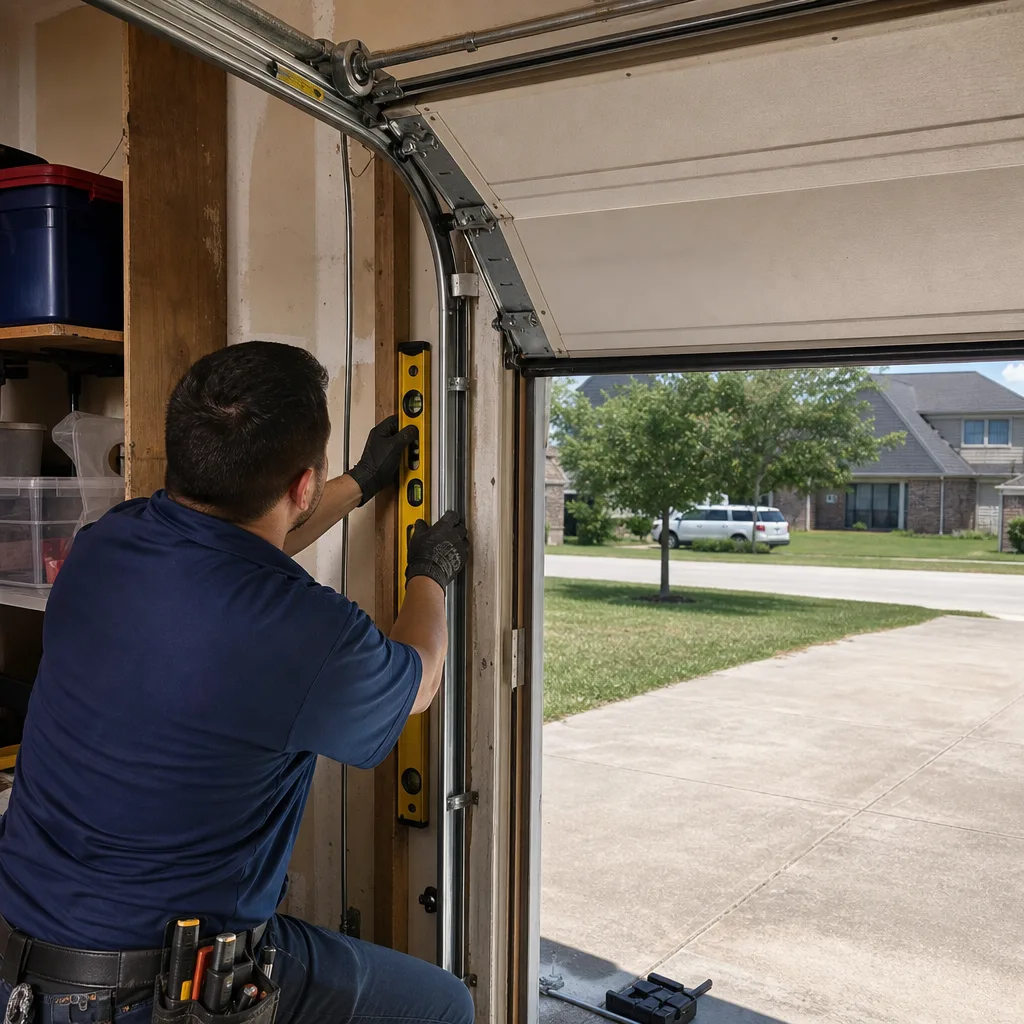
Garage door systems break down into roughly twelve components. Four of them are safe for a homeowner to service with basic tools and patience. The other eight either store mechanical energy, carry the full weight of the door, or sit close enough to both that a slip means a hospital visit. Here is the full picture, organized by risk level.
Safe for Homeowners
- Bottom weatherseal: This is a rubber strip on the bottom rail of the door. It cracks in Texas heat after three to five years. Replacement involves pulling out the old strip and sliding in a new one. Tools required: a utility knife and a flathead screwdriver. Time: 20 minutes.
- Photo-eye sensors: The two small boxes mounted 6 inches off the floor on either side of the door opening. When they are misaligned, the door refuses to close. Cleaning the lenses with a dry cloth and adjusting the brackets until both lights are solid requires zero mechanical disassembly.
- Remote and keypad programming: Every opener made after 2010 has a learn button on the motor housing. Press it, press the remote button, done. The process is in your owner’s manual and there is no physical risk involved.
- Lubrication (extension-spring doors only): On doors with long springs running parallel to the horizontal tracks, a homeowner can safely apply white lithium grease to the rollers, hinges, and the spring coils themselves. The spring is not under the same wound tension as a torsion system.
Requires a Professional
- Torsion spring replacement: The spring mounted on a steel shaft above the closed door. It is wound under tension and the winding bars used to adjust it can slip. This is the number one cause of garage-door-related emergency room visits in the United States.
- Lift cable replacement: The cables run through the torsion system and carry the door’s weight when the spring is in play. If a cable snaps while you are working on it, the door drops. Full stop.
- Track realignment under tension: Bent or shifted vertical or horizontal tracks mean the rollers are binding against a surface that is holding back several hundred pounds of door. Straightening a track without releasing tension on the spring is dangerous, and releasing tension on the spring is the part you do not do yourself.
- Opener logic board and travel module replacement: The electrical components inside the opener housing can be replaced safely by a homeowner in some cases, but diagnosing which board failed requires a multimeter and experience. A wrong diagnosis means purchasing a $180 board that does not fix the problem.
- Panel replacement on a door under spring tension: A dented lower panel seems simple. It is not. The door must be supported, the spring unwound, the section swapped, and the spring rewound to the correct number of turns. Incorrect turns shorten spring life or make the door dangerously unbalanced.
- Bearing and bracket replacement: The end bearing plates and center bracket hold the torsion shaft. They are under constant load. Removing them without professional knowledge of how to support the shaft is a recipe for the spring assembly releasing.
- Full opener rail replacement: The rail that carries the trolley from the motor to the door is loaded with a chain or belt under tension. Replacing it means disassembling the entire opener assembly.
- Any repair where you cannot see both ends of the problem: If the symptom is clear (door opens, then reverses) but the cause is not visible, stop. Guessing on a garage door is not like guessing on a leaky faucet. The consequences are heavier.
In McKinney, we see a lot of doors with heat-related failures. The North Texas summer pushes attic temperatures above 130 degrees, which transfers into the garage and accelerates spring metal fatigue. A spring that would last 12,000 cycles in a moderate climate may fail at 8,000 cycles in McKinney. That is a local fact that matters when you are deciding whether a repair is a one-time annoyance or a sign the whole system is aging.
The True Cost of DIY on a High-Risk Repair
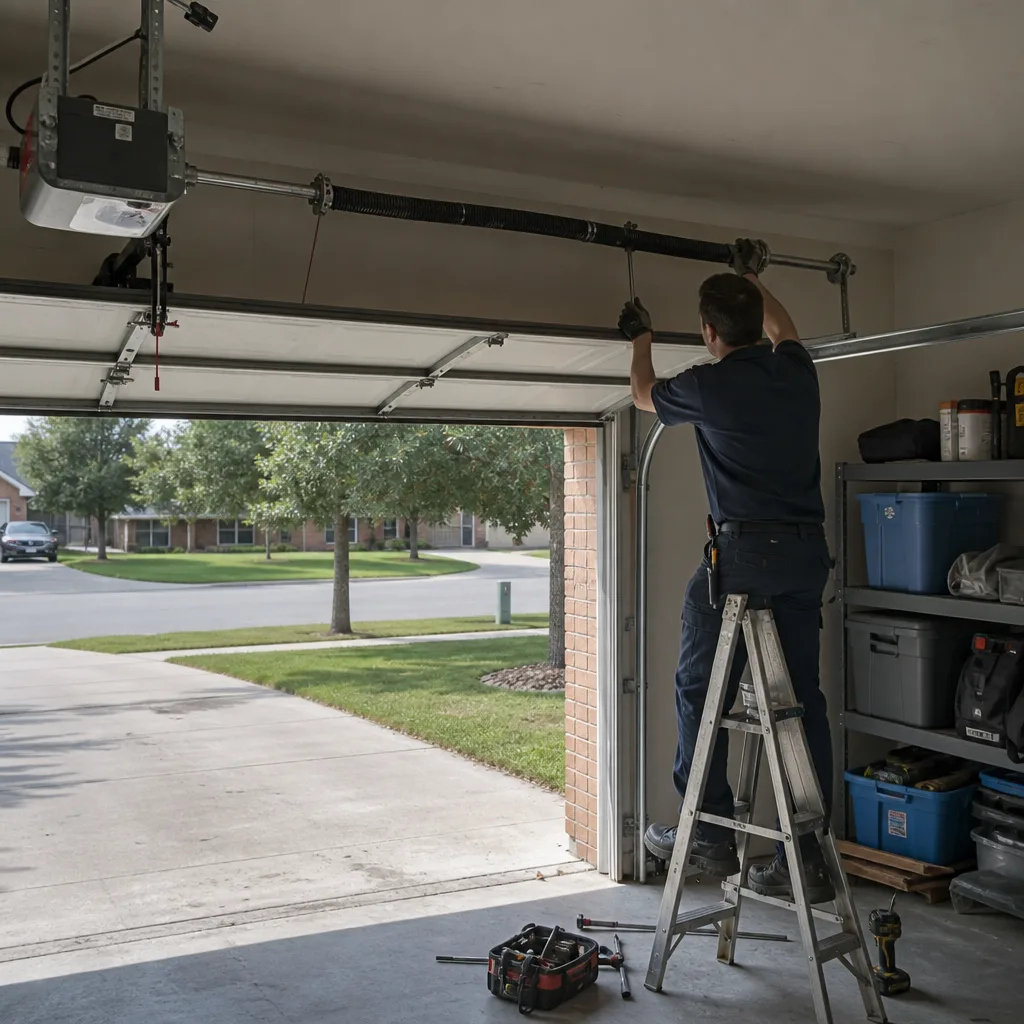
Let us walk through the math on a torsion spring replacement, because that is the repair where DIY temptation is highest and the financial trap is deepest. A pair of torsion springs for a standard door costs between $60 and $120 at retail, depending on wire diameter and length. That is what you will pay at a parts supplier. A professional replacement in McKinney runs between $280 and $420, including parts, labor, and the recalibration of the door balance. So the DIY savings looks like $200 to $300. That is the number most people see.
Here is the number most people miss. When a homeowner attempts a torsion spring replacement and the winding bar slips, the typical outcome is one of three things: a broken wrist or forearm, a damaged door panel from the door slamming down, or a partially wound spring that fails again within six months. The emergency room copay for a fracture is often more than the entire professional repair bill. And if you get the spring wound incorrectly and it breaks prematurely, you are paying for a second replacement within the year.
There is also the reality of parts markup. A professional technician does not pay retail for springs. We buy in volume and pass some of that through. The difference between the retail price you pay at a parts counter and what a technician charges for the same spring is often $30 to $50. That narrows the true DIY savings gap significantly before you account for the cost of your own time and the risk of a second repair.
Cost Comparison Table
- Torsion spring pair (retail): $60-$120
- Torsion spring replacement (professional, McKinney): $280-$420
- Straight DIY savings: $200-$300
- ER copay for a spring-winding injury: $150-$500+
- Damage repair from a dropped door: $300-$900+
- Second spring replacement within 12 months due to incorrect winding: $280-$420
The realistic economics only favor DIY when the job is zero-risk. On a bottom weatherseal, the parts cost $20 to $40 at retail and a professional charges $90 to $140. You save $70 to $100, and the risk of injury is essentially zero. On a torsion spring, the financial downside is asymmetric. You are risking hundreds to save $200.
We will also state plainly what our pricing looks like, because we believe the price should be on the page. At Servo Garage Doors McKinney, every job is quoted with a flat, written price and a written scope before any work begins. That is Clause 1 of The Haven Standard, the operating standard we have worked under since 2015. There is no “call for a quote” and no open-ended hourly billing. You see the full number before we touch the door.
McKinney Permit Implications for DIY Structural Work
McKinney has specific rules about what a homeowner can and cannot do to their own house without pulling a permit, and Garage Door Permits, Codes & Inspections in TX cover how garage door work falls into two categories. Cosmetic and component-level repairs generally do not require a permit. Structural and opening-sizing changes almost always do.
A homeowner in McKinney may legally replace weatherseal, swap out sensors, reprogram remotes, and lubricate moving parts without any interaction with the city. These are considered routine maintenance. You may also replace a garage door opener motor, since it is a plug-in appliance rather than a structural element. The city does not require a permit for an opener swap.
The line changes when the door opening itself is being modified. If you are widening a garage opening, converting a single door to a double, or installing a new header beam, you are now in structural territory. The City of McKinney requires a permit for any work that alters load-bearing elements of the exterior wall envelope, and a garage door header is a load-bearing element. The city specifically requires that the permit application list a licensed contractor when structural work is involved. A homeowner operating as an owner-builder must still show compliance with the same code requirements a contractor would, including wind-load ratings and proper header sizing.
Texas is a wind-load state, and McKinney sits in a region where garage doors must meet specific ASTM wind-load resistance standards based on the exposure category of your lot. A door installed without proper wind-load anchoring can fail during a severe thunderstorm, and the insurance claim will be denied when the adjuster discovers the install was unpermitted. That is not speculation. It is the standard language in most Texas homeowners policies.
For repairs and replacements that keep the existing opening unchanged, no permit is needed. For anything that touches the header, the rough opening, or the wind-load anchoring system, a licensed contractor on the permit is the difference between a compliant installation and an uninsurable one.
The Four DIY Jobs That Actually Make Sense
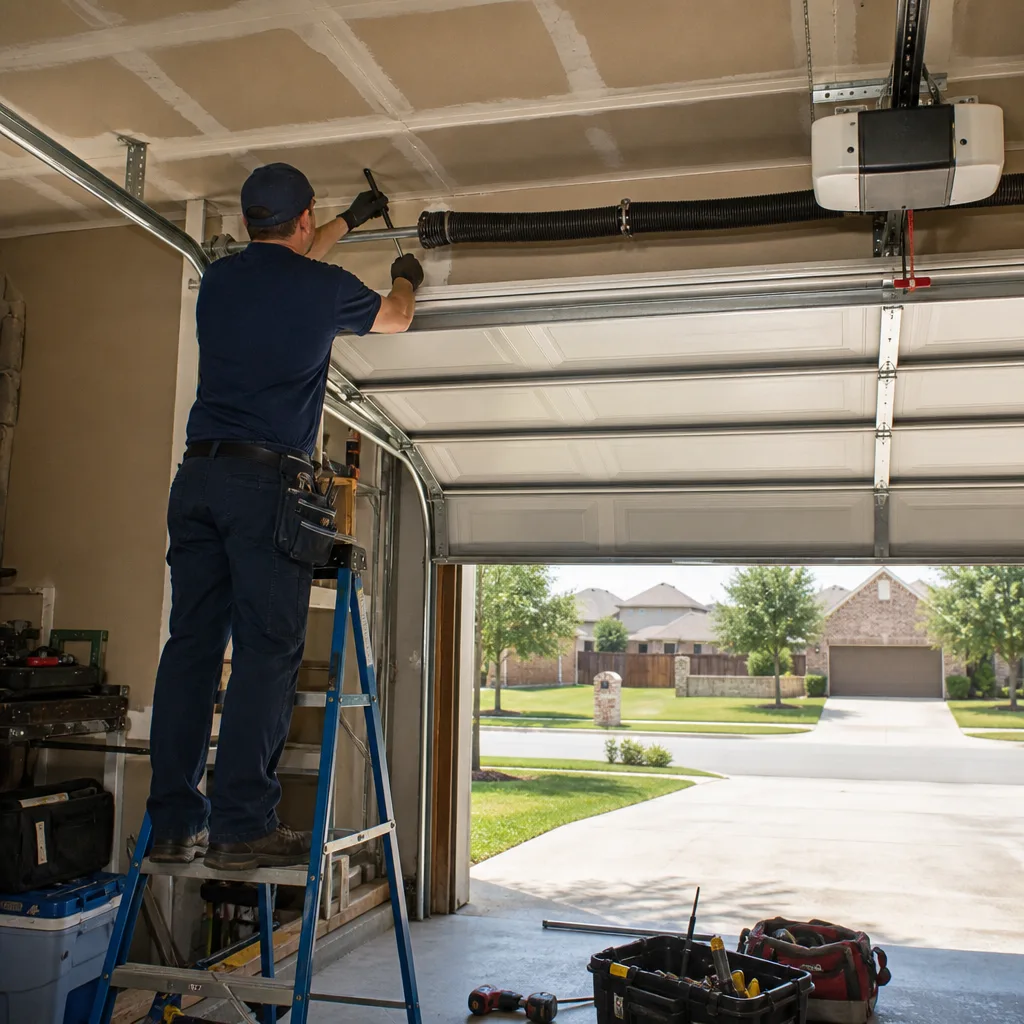
If you live in McKinney and you want to do some of this work yourself, do these four. They are safe, they are fast, and the tools are already in your house or available for under $30.
1. Bottom Weatherseal Replacement
The rubber strip along the bottom rail dries out and cracks in Texas summers. When you can see daylight under the door, the seal is gone. The replacement process takes about 20 minutes.
- Close the door fully and unplug the opener so no one opens it while you are working.
- Measure the width of the door and buy a replacement seal at any McKinney hardware supplier or online. The size is stamped on the old seal in most cases.
- Pull the old seal out of the aluminum track on the bottom rail. It slides out. If it is brittle, use a flathead screwdriver to break it free in sections.
- Spray the track with soapy water as a lubricant.
- Slide the new seal in from one end. Pull it through to the far end and trim the excess with a utility knife.
Tools: utility knife, flathead screwdriver, measuring tape. Cost: $20-$40. Time: 20 minutes.
2. Photo-Eye Sensor Cleaning and Realignment
The most common call we get that turns out to be a non-repair is a door that will not close because the sensors are misaligned or dirty. The fix is simple.
- Check both sensors, mounted roughly 6 inches off the floor on each side of the door opening.
- Wipe the lenses with a dry microfiber cloth. Do not use glass cleaner; it leaves a film.
- Check the small LED on each sensor. One should be green, one amber or red, depending on brand.
- If the lights are flashing, loosen the wing nut on the sensor bracket and adjust the sensor until both lights are solid.
- Tighten the bracket and test the door with the wall button.
Tools: microfiber cloth, adjustable wrench or pliers. Cost: $0. Time: 10 minutes.
3. Remote and Keypad Reprogramming
If you bought a used car with a garage door opener built in, or a battery died in the keypad, reprogramming is a five-minute job. The learn button on the opener motor is the key.
- Stand on a ladder and locate the learn button on the back or side of the opener motor housing. It is typically yellow, purple, red, or green.
- Press and release the learn button. The indicator light will come on.
- Within 30 seconds, press and hold the button on the remote or keypad you want to program.
- The opener light will flash or click to confirm the programming took.
- Test the remote from inside the car.
Tools: ladder. Cost: $0. Time: 5-10 minutes. Note: this works on LiftMaster, Chamberlain, Genie, and Craftsman openers. If the remote does not program, the issue is usually a dead battery in the remote, not the opener.
4. Lubrication of Rollers and Hinges (Extension-Spring Doors Only)
If your door has long springs that run along the horizontal tracks on both sides, you have an extension-spring system. These are older systems, common in McKinney homes built before 1990, and they are safe for a homeowner to lubricate.
- Unplug the opener and open the door manually to half height.
- Apply white lithium grease to the roller hinges, the hinge pins, and the spring coils.
- Wipe away excess with a rag. Do not use WD-40. It is a solvent, not a lubricant, and it will attract dust.
- Close the door and test the operation.
Tools: ladder, white lithium grease, rag. Cost: $10-$15. Time: 15 minutes.
For homeowners with torsion-spring doors (the vast majority in McKinney), lubrication of the torsion system is technically safe but we recommend leaving it to a technician because the spring is wound and the lubricant can pool on the winding cone if over-applied. A small over-application does not hurt, but if you are not sure what “the right amount” looks like, it is not worth learning on a wound spring.
How to Document DIY Work for the Next Technician
This section is different from what you will find on most garage door guides, and it matters more than you might think. When a homeowner performs their own repairs, the next technician who shows up inherits an unknown configuration. Springs have been swapped for incorrect sizes. Openers have been reprogrammed with unknown force settings. Cables have been replaced with the wrong length. Every one of those variables changes the diagnosis.
Here is how to create a paper trail that saves you money on future repairs.
- Photograph everything before and after. Before you touch anything, take a picture of the spring assembly, the opener motor housing with the model number visible, and the door in the closed position. After the work, take the same three photos. Store them in a folder labeled with the date.
- Write down the part numbers. If you replace a weatherseal, note the brand and the length. If you replace a circuit board, note the part number on the board itself. These numbers tell a future technician exactly what is installed, which eliminates guesswork.
- Note the spring wire diameter and length if you have extension springs. The spring is marked. Write it down. It determines door balance and will save the next technician diagnostic time.
- Record the opener force settings after any reprogramming. If you changed the travel limits or the force settings, write down the new values. An opener with force settings too high will not reverse when it should, and that is a safety issue the next technician needs to know about.
- Keep receipts in the same folder. A paper trail of what parts you bought and when tells the next technician the age of every component, and protects your warranty claim if a part fails early.
This is the same philosophy we apply to every visit at Servo Garage Doors McKinney. Every job closes with a documented photo record of what was found and what was done. That practice traces back to the founding rule we built the company on in 2015: the customer sees the failed part before anyone quotes a replacement. Clause 4 of The Haven Standard requires it. The math is simple: if you can see the broken spring, you do not have to take anyone’s word that it is broken.
How DIY Decisions Affect Your Door Warranty
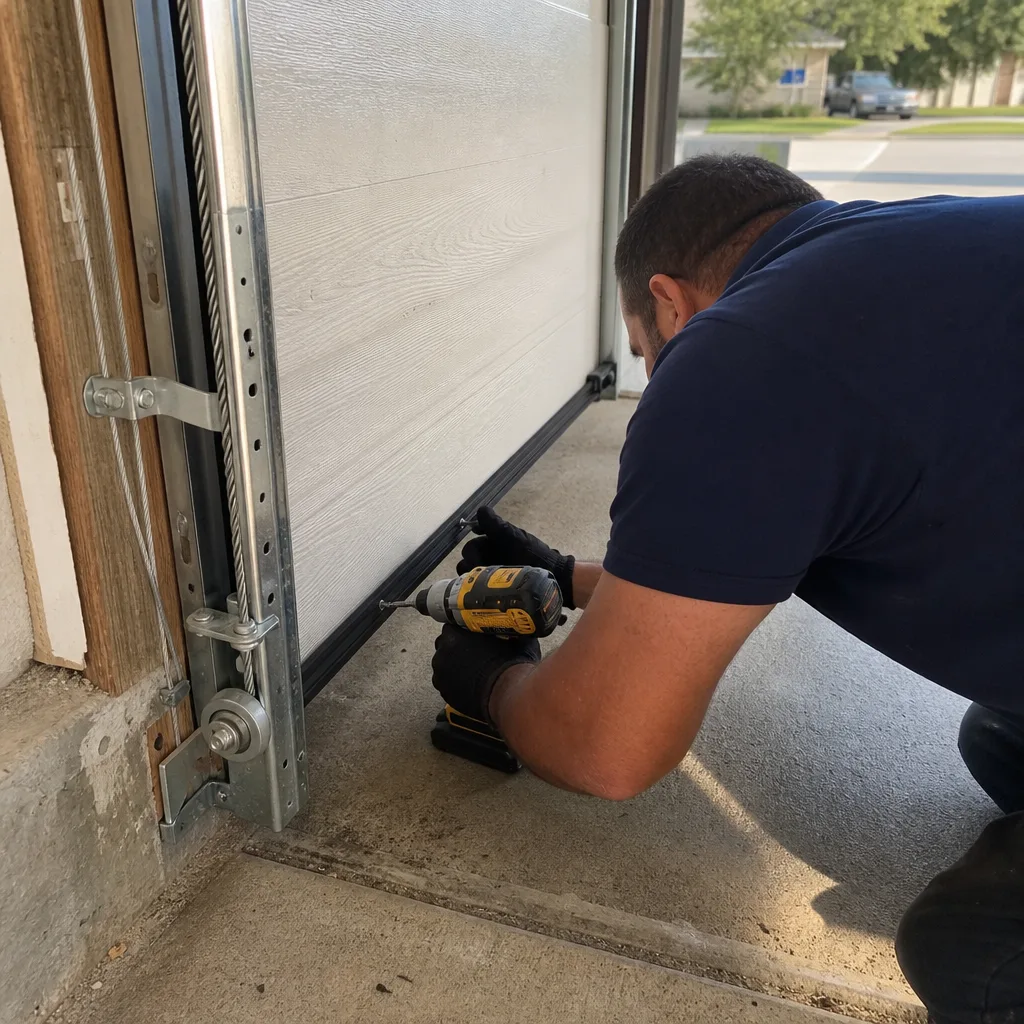
Every major garage door manufacturer, including Clopay, Amarr, and Wayne Dalton, writes warranty language that excludes damage caused by improper installation, modification, or repair. The exact language varies, but the practical effect is the same: a torsion spring replaced by an unlicensed homeowner voids the spring warranty and, in many cases, the door panel warranty for any damage resulting from a door that falls or slams shut later.
This is not a policy opinion. It is a documentation requirement. When a Clopay door fails at the spring and the homeowner files a warranty claim, the manufacturer asks for the installation and service records. If the spring was replaced by the homeowner without a receipt from a licensed professional, the warranty on the spring is void. If the door panel is damaged because a homeowner-replaced spring failed and the door came down, the panel warranty is also void because the damage resulted from an excluded repair.
In our experience working on doors across McKinney, we see warranty denials on DIY spring replacements regularly. The homeowner saved $250 on the install and lost a 10-year spring warranty and a panel replacement that would have cost $400 to $700. The math does not work.
The warranty calculation is different for the safe DIY jobs. Replacing a bottom weatherseal does not void any warranty. Reprogramming a remote does not void any warranty. Lubricating rollers, if done with the correct product, does not void any warranty. The warranty line sits exactly where the safety line sits: at the torsion spring and the lift cable.
Common Mistakes to Avoid
- Attempting torsion spring work with the wrong tools. Winding bars are not interchangeable with screwdrivers or pry bars. They are designed with a specific diameter and length to fit the winding cone securely. Using a screwdriver is how winding bars slip, and a slipping winding bar is how compound fractures happen. In the neighborhoods around Stonebridge Ranch, we have seen garages where the homeowner’s failed attempt left visible damage on the winding cone from a slipped tool. That is the point where the spring needs replacement, not adjustment.
- Using WD-40 instead of white lithium grease. WD-40 is a solvent. It strips away lubrication over time. White lithium grease is what the rollers, hinges, and bearings actually need. This is the most common maintenance error we see in McKinney garages.
- Replacing only one spring on a two-spring door. Torsion springs on a two-spring system are matched by cycle life. When one breaks, the other is at the same cycle count and will fail shortly. Replacing only one saves $100 today and creates an unbalanced door that wears out the new spring prematurely.
- Adjusting the force settings to force a door closed. When a door reverses as it approaches the floor, the cause is usually a sensor issue, an obstruction, or a worn roller. Cranking up the force setting overrides the safety mechanism. A door that closes with too much force is a door that will not reverse when your child or your dog is in the path.
- Disconnecting the opener emergency release without bracing the door. If the spring is broken, the emergency release cord is the only thing holding the door up. Pulling it without a plan means the full weight of the door comes down. In a McKinney garage with a 16-foot double door, that weight is significant enough to cause serious injury.
- Ignoring the door balance after doing custom work. If you have replaced panels, added insulation, or repainted the door with multiple coats, the weight has changed. The spring must be recalibrated to match. An unbalanced door strains the opener and shortens spring life.
- Buying parts based on “looks the same” rather than specifications. Two springs that look identical can have different wire diameters, different inner diameters, and different lengths. Installing the wrong spring is more dangerous than installing no spring at all, because it will break unexpectedly under load.
When to Call a Professional
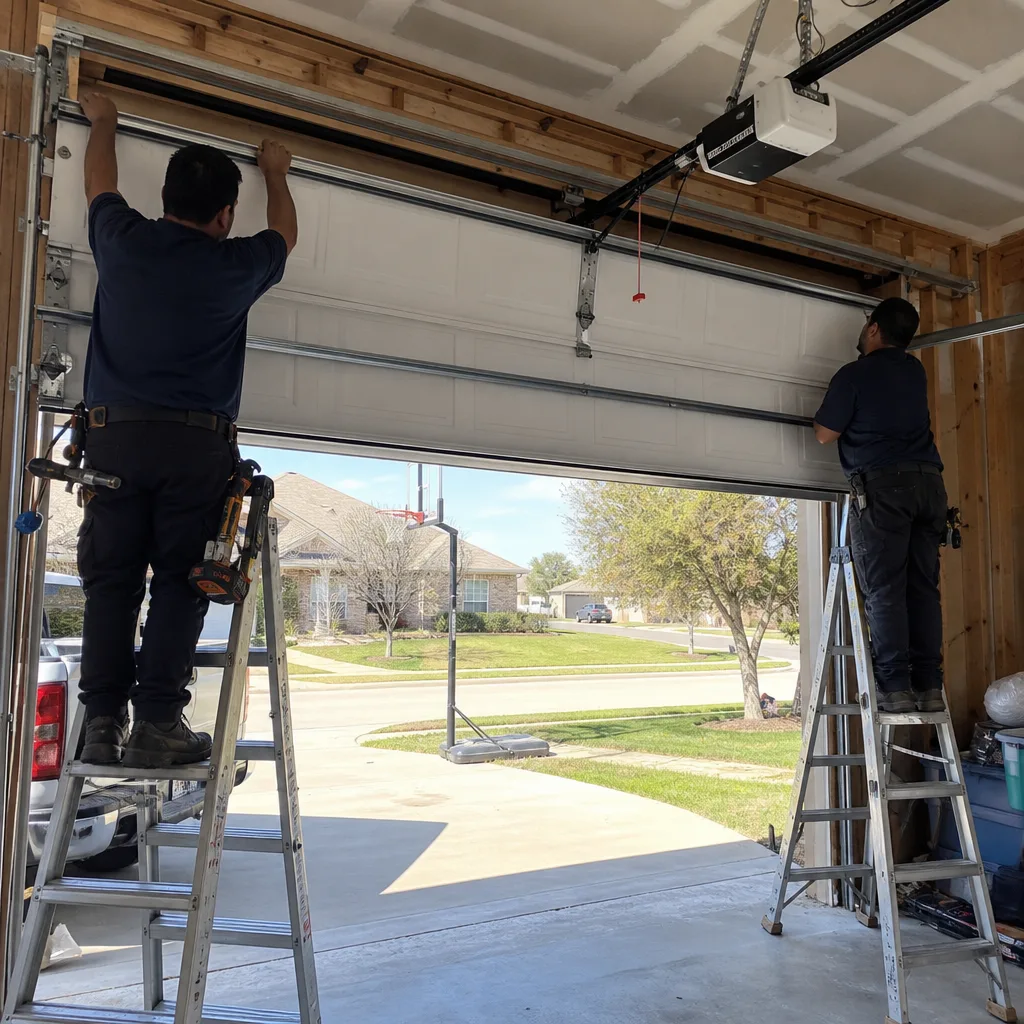
Call a professional when the repair touches the torsion spring, the lift cables, the track system under tension, or the structural connection between the door and the header. Call a professional when you have heard a loud bang from the garage and the door will not move. That sound is a torsion spring breaking, and the door is now dead weight. Call a professional when you have attempted a diagnosis and cannot see the cause. Guessing on a garage door is not a reasonable risk.
Servo Garage Doors McKinney offers free estimates in McKinney. Call (469) 815-7610 and a live person answers, day or night, including weekends and holidays. We name a technician and send an on-the-way text, not a callback window. The price is quoted in writing and agreed to before any work begins.
Frequently Asked Questions
You can safely replace the bottom weatherseal, clean and realign the photo-eye sensors, reprogram remotes and keypads, and lubricate rollers and hinges on extension-spring doors. These four jobs require no specialized tools and no interaction with stored mechanical energy. Call (469) 815-7610 for anything involving the torsion spring, lift cables, or track system.
Most repair jobs in McKinney run between $120 and $450 depending on the component. A bottom weatherseal runs $90 to $140. A torsion spring pair runs $280 to $420. An opener circuit board runs $180 to $320. The exact queoted price depends on your door size and the specific part. Servo Garage Doors McKinney quotes a flat, written price before any work starts.
There is no city ordinance in McKinney that prohibits a homeowner from attempting their own garage door spring replacement. The legal issue is not whether you can do it. It is whether your insurance and your warranty will cover the consequences if the job goes wrong. Most manufacturer warranties void spring coverage when the replacement is not performed by a licensed professional.
This is a common issue in McKinney summers. The heat causes the metal in the torsion spring to expand slightly, which changes the spring’s effective length and alters the door’s balance. It can also be caused by a failing logic board in the opener, which is heat-sensitive. If adjusting the opener’s travel limits does not fix the problem, the spring is likely near the end of its life. Call (469) 815-7610 for a diagnosis with a photo record of what we find.
A standard torsion spring is rated for about 10,000 cycles, which translates to 7 to 10 years for most McKinney homeowners who use the door twice a day. The North Texas heat shortens this lifespan slightly compared to cooler climates. If you park in the driveway and rarely use the door, the spring can last 12 to 15 years. If you use the door as your primary entrance, expect replacement every 7 to 9 years.
No. At Servo Garage Doors McKinney, the flat price you are quoted is the price you pay. For more guides & resources on how we price and service doors, visit our blog. Clause 1 of The Haven Standard requires a written price and written scope before any work starts. If we find additional issues during the repair, we photograph them, document them, and quote a separate written price before touching them. Nothing gets added to the invoice without your approval in writing.
Yes. We service all eight major brands, including Clopay, Amarr, Wayne Dalton, LiftMaster, Chamberlain, Genie, Craftsman, and Raynor. Parts for older Craftsman and Genie models are often still available through our supply chain even when they are discontinued at retail. If you have a door we do not carry parts for, we will tell you in writing rather than attempting a workaround.
The Bottom Line
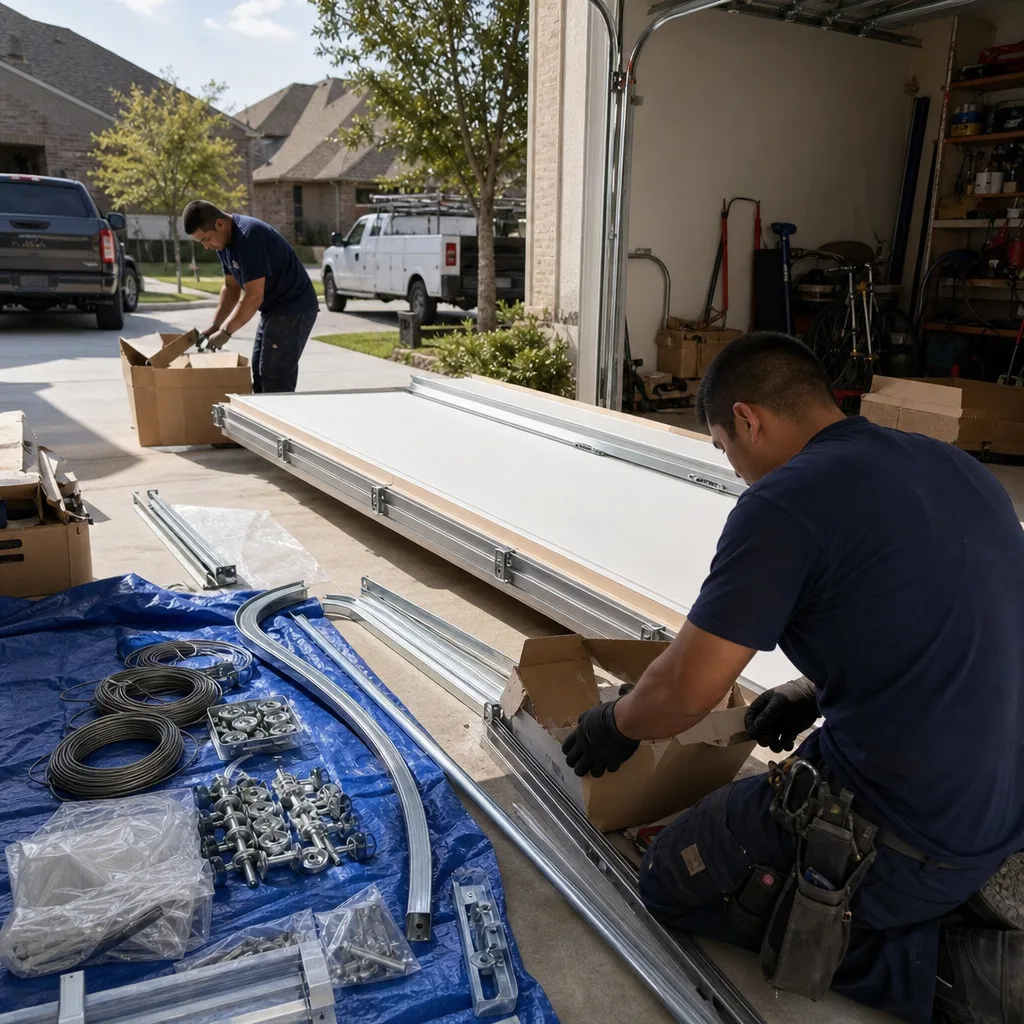
The DIY vs professional decision on a garage door is a question of stored energy, not skill level. Four jobs are safe for a McKinney homeowner: weatherseal, sensors, remotes, and lubrication on extension-spring doors. Everything else involves springs, cables, or track tension that demands a licensed professional and a paper trail. The financial case for DIY collapses on any job where a mistake costs more than the professional quote would have cost in the first place. If you are not sure which side of the line you are on, call us and we will tell you over the phone. That conversation is free, and the answer comes with a written price if you want the work done.
For more on Servo Garage Doors McKinney home services, see our full Garage Door Repair in McKinney page, our Garage Door Installation in McKinney guide, and our Garage Door Opener Repair & Installation in McKinney resource.
Written by Marcus Deller, Owner at Servo Garage Doors McKinney, serving McKinney since 2015.